






The Perfect Goodbye We All Cried Through
Let’s go back to 2010. The lights come up on *Toy Story 3*, and there isn’t a dry eye in the house. After a harrowing, near-death experience in a furnace, Woody, Buzz, and the gang are saved, only to face a more poignant ending: obsolescence. Andy, their
kid, is heading to college. In the film’s final, gut-wrenching minutes, he makes the deliberate, thoughtful choice to pass his cherished friends on to a new child, Bonnie. He plays with them one last time. “Thanks, guys,” he whispers before driving away. It was more than a movie ending; it was a cultural event. For the millions of kids (and their parents) who had grown up alongside Andy since 1995, this was a perfect, devastatingly beautiful conclusion. It validated the love we have for our childhood things while giving us permission to grow up and let them go. It was, by all accounts, a flawless landing.
The Epilogue That Split the Fandom
Then came *Toy Story 4*. Announced to a collective gasp of “But why?” from the internet, the 2019 film faced an enormous challenge: justifying its own existence. Against the odds, it largely succeeded, winning an Oscar for Best Animated Feature and earning stellar reviews. But it came at a cost. The film ended by fundamentally breaking the franchise’s core rule: a toy’s purpose is its kid. Woody, in a move that still fuels fan debates, decides to leave Bonnie and the rest of his family to live a life on the road with Bo Peep. He and Buzz Lightyear share a quiet, permanent farewell. “To infinity,” Buzz says. “And beyond,” Woody replies, his voice full of finality. While *Toy Story 3* was about the bittersweet transition of growing up, *Toy Story 4* was about radical reinvention and finding a new purpose. For many, it was a beautiful epilogue. For others, it was a betrayal of Woody’s character and a solution to a problem that didn’t exist, splitting the core duo that defined the entire saga.
The Unavoidable Business of Nostalgia
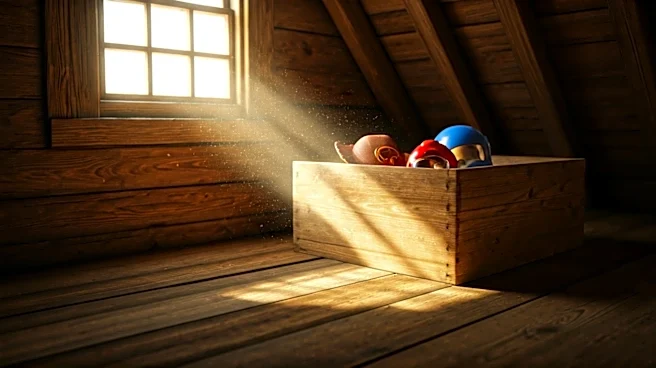
If *Toy Story 3* was the perfect ending and *Toy Story 4* was the divisive epilogue, then what is *Toy Story 5*? The answer, first and foremost, is business. In early 2023, Disney CEO Bob Iger announced that sequels to several beloved properties—including *Frozen*, *Zootopia*, and *Toy Story*—were in the works. The announcement came during a period of introspection for Disney, as the company grappled with streaming losses and a few high-profile box office disappointments from its animation studios. In that context, greenlighting another *Toy Story* is less a creative impulse and more a strategic retreat to safety. Established, multi-billion-dollar intellectual property is the closest thing Hollywood has to a guaranteed return on investment. The toys are being taken out of the box not necessarily because there’s a vital new story to tell, but because they are one of Disney’s most reliable assets in an increasingly unpredictable market.
The Incredible Risk of One More Adventure
This is what makes the revival so “emotionally expensive.” The good news is that the key players are back. Both Tom Hanks and Tim Allen have confirmed they are returning to voice Woody and Buzz, a non-negotiable for any legitimate continuation. But their return only raises the stakes. How do you reunite them after such a definitive goodbye? Do you undo the ending of *Toy Story 4*? Or do you craft a story where they operate in separate worlds? Pixar’s CCO, Pete Docter, has promised the new film will be surprising and feature things we've never seen before. But the creative challenge is immense. The new film must not only be a great movie on its own terms but also retroactively justify its existence in a way that doesn’t diminish the power of the previous endings. It’s a tightrope walk over a canyon of cherished memories. One wrong step, and you don’t just have a bad movie; you risk tarnishing the legacy of one of the most beloved sagas in film history.