


The Fabric's Unseen Blueprint: What Is Grainline?
Every piece of woven fabric has an internal architecture, a grid of threads running in two directions. Think of it like the grain in a piece of wood. The threads running lengthwise, parallel to the finished edges (the selvage), are called the 'straight
grain'. These are the strongest, most stable threads with the least amount of stretch. The threads running from side to side are the 'cross-grain', which has slightly more give. Standard procedure in garment making is to align pattern pieces with the straight grain. This ensures the clothing hangs predictably and resists stretching or twisting, which is why your pant legs hang straight and your shirt seams don't warp.
The Conventional Rules of Construction
For centuries, following the straight grain has been the default for durable, well-fitting clothes. It provides stability where you need it most—vertically down the body. Pattern pieces almost always feature an arrow, the grainline marking, to show how it should be aligned parallel to the fabric's edge. Cutting against this rule is often seen as a mistake, the kind of error that can make a cheap t-shirt twist after one wash. This fundamental principle ensures structure and predictability. But in the hands of designers known for their playful and architectural shapes, these rules are made to be bent, if not entirely broken.
Copenhagen's Voluminous Rebellion
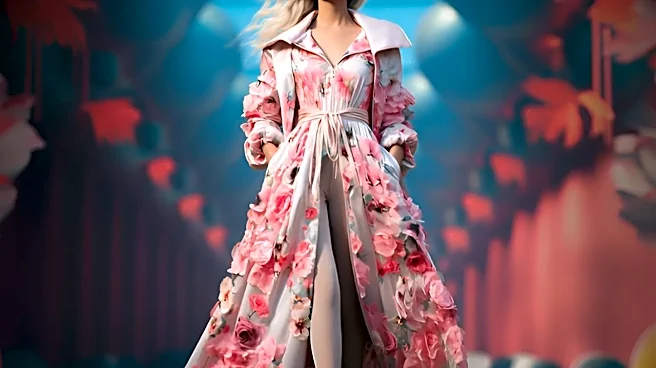
Copenhagen designers like Cecilie Bahnsen and Stine Goya have built their brands on a signature look that is both voluminous and light. Their secret is intentionally ignoring the standard grainline to achieve specific effects. Instead of cutting a skirt panel along the strong, stable straight grain, they might turn the pattern 90 degrees and cut it on the cross-grain. Because the cross-grain has a little more give and a different structural quality, this encourages the fabric to stand away from the body, creating width and a sculptural, bell-like shape rather than a straight drape. This is a key technique for creating those iconic, full-skirted silhouettes that feel airy, not heavy.
Bias vs. Cross-Grain: Two Paths to Volume
There's another way to break the grainline rules: cutting on the 'bias'. This means cutting the fabric at a 45-degree angle to the straight and cross grains. Unlike the architectural stiffness from a cross-grain cut, the bias unlocks the maximum potential for stretch and fluid drape in a woven fabric. It allows the material to cling and mold to the body, creating a slinky, flowing volume. While Copenhagen style is more famous for its structured volume, the bias cut is another tool in the arsenal, perfect for a fluid dress that still moves with a generous, dynamic shape. The difference is key: cross-grain creates shape that stands on its own, while bias creates shape that moves with the body.
The Result: Effortless but Intentional
This masterful manipulation of grainline is why the voluminous designs from Copenhagen feel so special. It's a highly technical approach that results in a look of effortless cool. The volume isn't achieved with heavy, stiff petticoats, but by harnessing the fabric’s inherent properties in an unconventional way. Designers like Cecilie Bahnsen are known for this deep understanding of fabric manipulation, creating sculptural forms that are still romantic and easy to wear. This 'controlled volume' allows for dramatic, statement-making silhouettes that don't sacrifice the relaxed, functional aesthetic that Scandinavian style is celebrated for. It's a quiet rebellion against convention, woven right into the fabric itself.