

The Utopian Promise of VAR
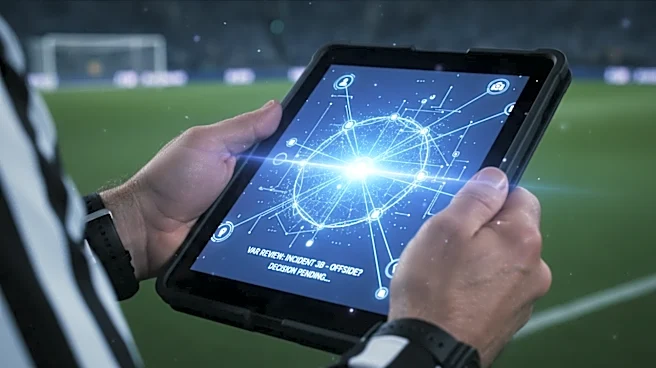
By 2018, the Video Assistant Referee, or VAR, was poised to be football’s great corrector. For the first time on the sport’s grandest stage, a team of officials had access to every camera angle, ready to advise the on-field referee on “clear and obvious
errors.” The goal was simple: eliminate the game-changing injustices that have haunted World Cup history, from phantom goals to unspotted handballs. FIFA itself boasted that VAR was elevating refereeing accuracy to over 99 percent. For fans tired of seeing their team’s fate decided by a single missed call, it sounded like a revolution in fairness. The dream was a tournament where the debate would be about the players’ skills, not the referee’s eyesight.
The Moment It All Became Complicated
The final between France and Croatia was balanced at 1-1 when the moment arrived. Following a French corner kick, the ball deflected off the hand of Croatian player Ivan Perišić. On-field referee Néstor Pitana didn't initially see an infraction. But as French players protested, the unseen VAR team buzzed in his ear. After a long, dramatic pause, Pitana trotted to the pitch-side monitor to review the play himself. The world watched as he scrutinized slow-motion replays. Did the ball hit the hand, or did the hand move to the ball? Was it deliberate? Was his arm in an “unnatural position”? These are questions of interpretation, not fact. After minutes of deliberation, Pitana pointed to the penalty spot.
The Human Element Returns
France’s Antoine Griezmann converted the penalty, giving his team a 2-1 lead they would not relinquish. But the controversy was just beginning. Pundits and fans erupted. Alan Shearer, on the BBC, called the decision “ridiculous,” arguing that there was no way it was a deliberate handball. Critics pointed out that slow-motion replay makes nearly any contact look more intentional and severe than it is in real-time. VAR hadn't provided a clean, objective truth; it had only moved the argument. Instead of debating what the referee saw, we were now debating his interpretation of a video. The final decision still rested on one man’s subjective judgment, now amplified by the weight of technological intervention.
A Legacy of Shifting Arguments
The 2018 final didn't kill VAR, but it did shatter the illusion of its perfection. In the years since, VAR has become a permanent, and often polarizing, fixture in top-level soccer. The debate is no longer about whether we should have technology, but how it should be used. Controversies have simply evolved. Arguments now center on fractional offside decisions measured by digital lines, the definition of a “clear and obvious” error, and the way video review disrupts the flow and emotion of the game. The technology succeeded in giving referees more information, but it couldn't give them an algorithm for wisdom or a button that outputs a universally accepted truth. The 2018 final was the first global lesson in this new reality.