





An Architect of Modern Animation
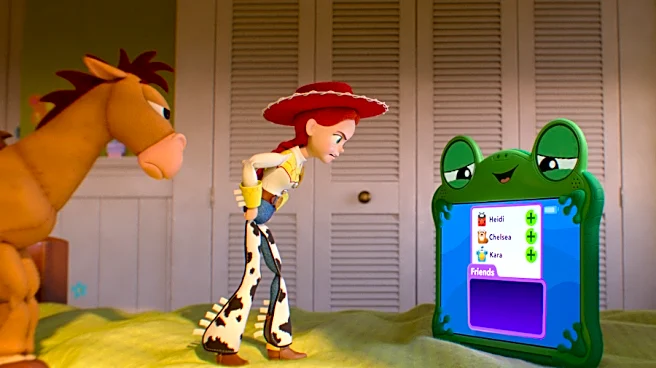
Before we get to the decision that baffled executives, it’s important to understand who Andrew Stanton is. As one of the original creative minds at Pixar, his fingerprints are all over the studio’s golden age. He was a writer on the entire Toy Story saga
and the director behind two of the most emotionally resonant animated films ever made: Finding Nemo and WALL-E. Stanton built a career on a simple but powerful principle: “Make me care.” His stories are famous for their ability to forge deep emotional connections, often with the most unlikely of characters—a lost clownfish, a forgotten toy, or, in this case, a lonely, trash-compacting robot.
The Challenge: A Silent Protagonist
The central challenge of WALL-E was monumental. Stanton wanted to tell a love story led by a character who couldn't speak in any traditional sense. For the first act of the film, there is virtually no human dialogue. The audience had to fall in love with a small, rusty box on wheels whose only job for 700 years was to cube garbage. Everything would hinge on the robot's personality, conveyed through his movements and, crucially, his 'voice.' The studio, understandably, was nervous. How could a movie sustain audience interest, let alone build an epic love story, with a main character who only communicated in beeps and whirs? This uncertainty put immense pressure on the casting of the titular role.
The Casting Choice That Raised Eyebrows
Instead of hiring a bankable star or a seasoned voice actor, Stanton made a radical choice. He turned to Ben Burtt, a legend not in acting, but in sound design. Burtt was the genius who created the sound of the lightsaber, the voice of R2-D2, and the distinctive yowl of Chewbacca. To the studio, this was a stunning move. They were making an expensive, high-concept film, and the director wanted the guy who made laser noises to 'voice' the main character. Burtt wasn’t an actor; he was a technical wizard who worked with motors, filters, and sound files. Stanton brought Burtt onto the project three years before its release, treating the creation of the voice not as a post-production task but as a foundational element of character development.
Artistic Conviction vs. Studio Convention
The decision to use Burtt was a perfect example of Stanton's artistic integrity. He believed WALL-E's soul wasn't in words but in sounds that conveyed emotion and personality. He needed a creator, not just a performer. While a traditional actor would recite lines, Burtt built the character from the ground up, experimenting with thousands of sound files to find the robot’s voice. He even ended up using his own heavily manipulated voice as the source for many of WALL-E's vocalizations. Stanton’s pitch was simple: he was making his “R2-D2 movie,” and to do that, he needed the man who actually created R2-D2. For a studio focused on proven formulas, this was a leap of faith, but Stanton’s conviction was that the purest form of cinematic storytelling didn’t need dialogue at all.
A Vindicated and Iconic Vision
WALL-E went on to become a global phenomenon and is widely regarded as one of the greatest animated films of the 21st century. The character of WALL-E is beloved not in spite of his limited speech but because of it. Burtt's creation of beeps, whirs, and the plaintive utterance of “Eee-va” gave the robot a depth of personality and pathos that traditional dialogue never could have. The 'voice' is now iconic, inseparable from the character's charm and emotional journey. Stanton’s gamble paid off spectacularly, proving that the right voice for a character isn't always the most obvious one. It’s a philosophy Pixar has often embraced, frequently casting its own employees in roles if their voice is the best fit, as was the case with EVE, who was voiced by Pixar employee Elissa Knight.