






A Rosetta Stone for the Global Game
Let's be honest: for the casual American sports fan, diving into the World Cup can feel like starting a TV series on season five. The stars are unfamiliar, the rhythm of the game is different, and the very concept of what makes a player 'great' can feel alien.
Unlike the stop-start, stats-heavy nature of the NFL or the individual heroics of the NBA, soccer's brilliance is often subtle and cumulative. This is where the comparisons come in. They’re not just lazy takes; they are a necessary act of cultural translation. By framing a foreign sport in a domestic context, we give ourselves a foothold. It’s a way to quickly understand a player’s role, impact, and narrative weight without needing a decade of accumulated knowledge. It's less about finding a perfect one-to-one match and more about building a bridge to appreciation.
Finding Soccer’s GOATs and Superstars
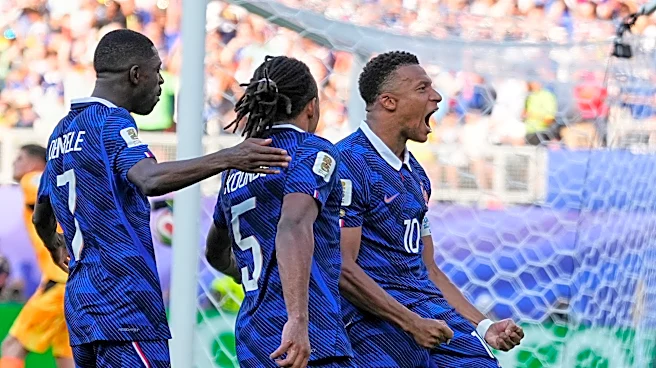
The easiest entry point is comparing the titans. For years, the debate over Lionel Messi and Cristiano Ronaldo has been filtered through an American lens: Who is Michael Jordan and who is LeBron James? These aren't just discussions about skill, but about narrative, dominance, and personality. The Messi-Jordan comparison often centers on innate genius and a quiet, almost artistic dominance that seems to transcend effort. The Ronaldo-LeBron analogy focuses on physical perfection, relentless drive, and incredible longevity at the pinnacle of the sport. More recently, you hear Kylian Mbappé, the French phenom, compared to a young superstar in another sport, someone who explodes onto the scene with a combination of speed and skill that feels unfair to everyone else. These comparisons help U.S. fans immediately grasp the scale of a player's greatness and their place in the global conversation.
Translating Roles, Not Just Resumes
Beyond the superstars, the analogies get even more useful by clarifying on-field roles. The most common and effective of these is comparing a deep-lying midfielder to a quarterback. A player like Andrea Pirlo in his prime, or a modern conductor, who sits back and dictates the pace of the game with long, visionary passes is instantly understandable to anyone who has watched Tom Brady or Patrick Mahomes read a defense and launch a perfect spiral. A tricky winger who beats defenders one-on-one might be described as an ankle-breaking point guard like Kyrie Irving. A powerful, dominant central defender can be framed as a shutdown cornerback, erasing the opponent's best offensive threat. These translations make the tactical nuances of soccer—a sport where much of the important action happens away from the ball—suddenly visible and compelling.
A Gateway, Not a Destination
Of course, these comparisons are imperfect. Purists correctly argue that soccer is its own unique art form and that reducing a player to an analogue from another sport misses the point. A quarterback doesn't have to tackle, and a point guard doesn't have a 120-yard field to cover. But to dismiss these comparisons entirely is to miss their true purpose. They aren't the final analysis; they are the invitation. They provide the initial hook that gets a casual fan invested in a player or a team. Once that emotional connection is made, the door is open for a deeper, more nuanced appreciation of the sport on its own terms. The fan who starts by seeing a midfielder as a "quarterback" may eventually come to appreciate the specific genius of a holding midfielder's positional play—no clumsy comparison required.