







The Clock That Never Stops
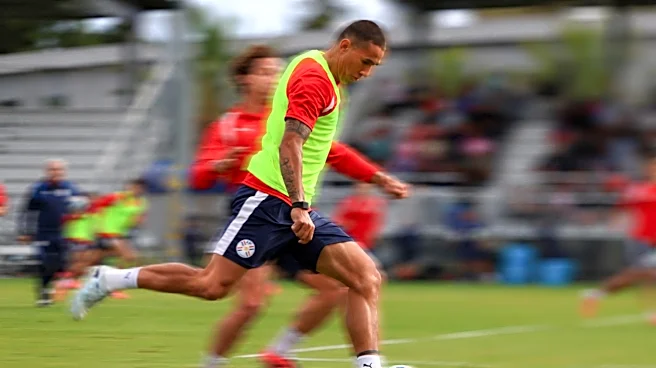
The first thing that throws hockey fans is the most basic: soccer's clock counts up from 0:00 to 45:00 in the first half and 45:01 to 90:00 in the second. Unlike the NHL, where the clock operator stops time for every whistle—offsides, icing, penalties,
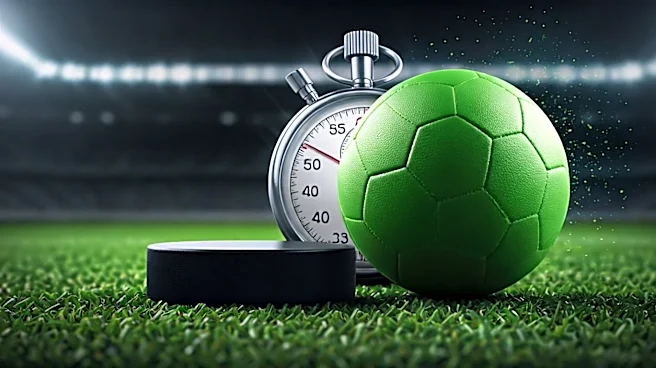
fights—the soccer clock runs continuously. The fundamental philosophy behind this is to preserve the natural, flowing rhythm of the game. Soccer has far fewer mandated stoppages than hockey. The ball goes out of bounds, a foul is committed, but the game is designed to restart quickly. A constantly stopping clock would interrupt a flow that is central to the sport’s identity. It treats the 90 minutes as a single, fluid block of time, with the action happening inside it, rather than a series of discrete, precisely timed segments of play.
The Mystery of 'Added Time'
This is where it gets truly strange for a hockey fan. Since the clock doesn't stop for injuries, substitutions, or egregious time-wasting by a team trying to protect a lead, that “lost” time has to be accounted for. Enter stoppage time, or “added time.” At the end of each 45-minute half, the fourth official holds up a board indicating the minimum number of additional minutes the head referee has decided to add. This isn't a precise science. The referee keeps their own time and subjectively estimates how many minutes were lost to delays. It’s an art, not a science, which is maddening for fans accustomed to the digital precision of a hockey game. That feeling of uncertainty—is it two minutes? Five? Will the ref let this one last attack play out?—is a unique and often frustrating feature of soccer’s drama.
Hockey’s Culture of Precision
Now, think about hockey. The 20-minute period is an absolute. When the puck is not in live play, the clock is not running. This system reflects the sport's nature: it's a game of explosive bursts of action punctuated by frequent, necessary stops. Face-offs, line changes, penalties, and TV timeouts are integral parts of the structure. A running clock would be nonsensical; a team could kill an entire two-minute power play simply by icing the puck and engaging in scrums after the whistle. Hockey’s stop-clock ensures that the fans and players get exactly 60 minutes of competitive action. This precision creates a specific kind of tension. When the announcer says there are 3.4 seconds left, you know *exactly* what that means—enough time for one face-off and one desperate shot. There is no ambiguity.
How the Clock Shapes Strategy
The two clock systems create completely different strategic landscapes, especially at the end of a close game. In hockey, the coach with the empty net knows precisely how long their 6-on-5 advantage will last. Every decision is calibrated to a dwindling, exact number. You can map out the final minute with a degree of certainty. In soccer, the strategy becomes psychological. A team with a 1-0 lead in the 88th minute will start “managing the game”—taking their time on throw-ins, faking injuries, and making slow substitutions. They are trying to run down not just the official clock, but the referee’s unofficial stoppage time calculation. The trailing team, meanwhile, plays with a frantic energy, trying to force the referee to add more time and create one last chance. The ambiguity of the clock becomes a weapon in itself, creating a very different kind of nail-biting finish defined by guesswork and the referee’s discretion rather than digital finality.