




Your Brain Prefers a Pretty Picture
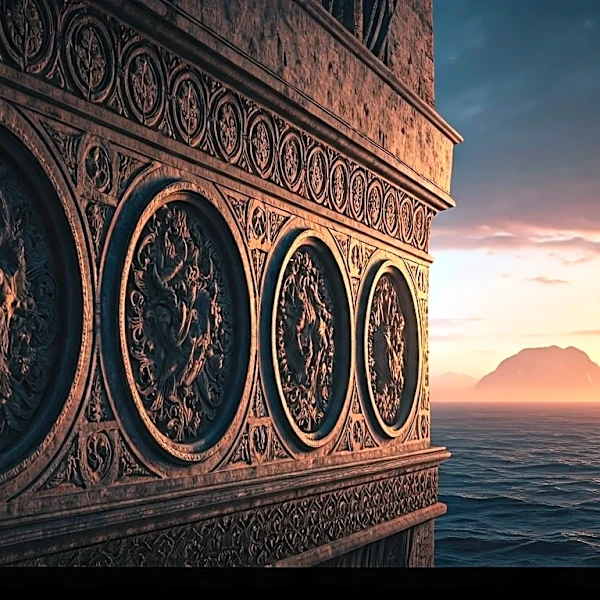
Our brains are fundamentally visual. We process images significantly faster than text or spoken language, creating an immediate emotional and sensory shortcut. A film's production design—its sets, colors, costumes, and props—doesn't just support the story;
it creates a tangible world the audience can inhabit. This visual immersion creates powerful emotional landmarks. Think about it: a specific color palette can make you feel tense or nostalgic before a single line of dialogue is spoken. That sensory data is sticky. While a complex plot requires active mental reconstruction, a visual mood is absorbed instantly, searing the film into our long-term memory with much less effort.
Building Worlds That Last Longer Than Stories
Can you, right now, recount the entire political plot of Denis Villeneuve’s “Dune”? Maybe. But you can certainly picture the vast, sun-scorched deserts of Arrakis, the monolithic buildings, and the colossal sandworms. The same is true for “Blade Runner 2049,” where the smog-choked, neon-drenched Los Angeles and the hauntingly orange wasteland of Las Vegas are the primary takeaways for many viewers. The production design in these films is so immersive and meticulously detailed that it becomes the main character. For awards voters, who see dozens of films in a short period, this kind of unforgettable world-building can easily stand out from a sea of well-constructed but less visually distinct narratives. It’s a sensory gut punch that’s hard to forget.
When the Style Is the Substance
For some directors, production design isn’t just a backdrop; it is the narrative engine. No one exemplifies this more than Wes Anderson. His films are instantly recognizable for their symmetrical framing, meticulous set dressing, and storybook color palettes. In an Anderson film, the world is so highly curated that the aesthetic choices reveal more about the characters and their emotional states than the plot itself. The design is deliberately artificial, which ironically gives actors and audiences a more tangible, visceral world to engage with. It proves that visible, bold design can be just as successful at moving a story forward as a so-called “invisible” style. For voters and fans alike, the memory of an Anderson film is less about what happened and more about the perfectly composed, quirky world they visited.
But Don’t Forget the Twist
This isn't to say that plot is irrelevant. Of course not. A brilliant plot twist or a deeply moving character arc can be just as memorable as a stunning visual. A film like “Parasite” is unforgettable precisely because of its narrative structure and the shocking turns it takes. But even there, the production design is critical; the stark architectural contrast between the two family homes is a visual representation of the film's central themes. Similarly, a movie like “Clerks” is remembered for its sharp, hilarious dialogue, proving that a great script can triumph over low production value. The point isn't that design is inherently superior to plot, but that it operates on a more primal level of memory. It creates the foundational feeling, the world that a great plot then unfolds within.