
The Pre-Frieze Landscape
To understand Frieze’s impact, you have to remember what came before it. For years, the main event on the New York art fair calendar was The Armory Show. Held on the cavernous piers of the Hudson River,
it was a sprawling, serious affair. The attire was practical and professional: comfortable shoes for miles of walking, and a lot of nondescript black. The vibe was less about being seen and more about the business of art—gallerists making deals, curators scouting talent. Style was an afterthought, something that belonged to the fashion world, not the art world. The term “art world chic” existed, but in America, it often translated to a kind of severe, intellectual uniform, not a public-facing performance of taste.
A New Philosophy of Fair
Then, in 2012, Frieze arrived from London. The British import didn't just set up shop; it introduced a whole new philosophy. Its founders, Amanda Sharp and Matthew Slotover, had built their reputation on a fair that was as much a cultural event as a commercial one. For its New York debut, they chose a deliberately unconventional location: Randall's Island. Getting there required a dedicated ferry, turning the trip into a pilgrimage. This wasn't a drab convention center you could just pop into. The journey itself filtered the audience and created a sense of occasion. Once there, visitors entered a bespoke, light-filled tent designed by a buzzy architecture firm. It felt less like a trade show and more like a temporary museum or a luxury festival. The message was clear: this was different.
The Birth of the Spectacle
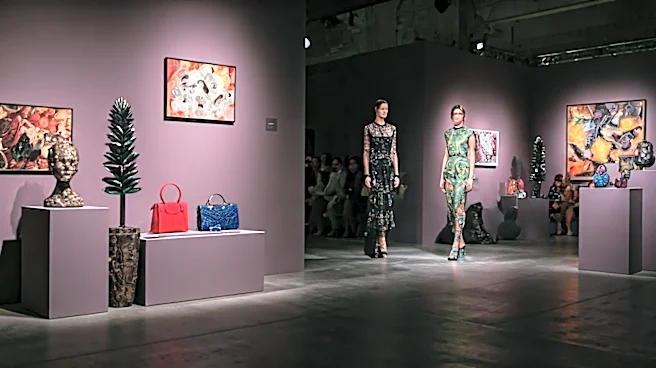
This curated environment was the perfect incubator for a new kind of social performance. The timing was impeccable. By 2012, Instagram was gaining critical mass, training a generation to see the world as a series of photo opportunities. Frieze’s airy, white-walled corridors, outdoor sculpture park, and photogenic crowds were tailor-made for the feed. Suddenly, the fair wasn't just about the art on the walls; it was about the art of being there. The people became part of the exhibition. Media coverage shifted. Instead of just reviewing the art, outlets like Vogue and The Cut began dispatching street-style photographers to document the outfits. “Who Wore What at Frieze” became as important a headline as “What to See at Frieze.”
The Unofficial Dress Code
This intense focus gave birth to a specific aesthetic that redefined “art world chic” for an American audience. It was a departure from both the all-black gallerist uniform and the loud, logo-heavy glamour of fairs like Art Basel Miami Beach. Frieze New York style was about a quieter, more intellectual form of luxury. Think architectural pieces from labels like The Row or Jil Sander, paired with expensive but understated sneakers. It was about wearing a coat that looked like a sculpture or carrying a bag that only those in the know would recognize. The look signaled that you weren't just wealthy, but culturally fluent. You didn't just buy art; you embodied it. It was a uniform for the creative class, and Frieze was its runway.
From Island Outpost to Urban Hub
In 2021, Frieze moved from its island outpost to The Shed at Hudson Yards, a state-of-the-art cultural venue in the heart of Manhattan. The move solidified its position as a central fixture of New York’s cultural calendar. While the pilgrimage aspect was gone, the focus on style remained, adapting to its new, sleeker environment. The fair had successfully exported its brand of cool from the fringes to the center of the city. By then, its influence was undeniable. Other fairs had been forced to up their game, paying more attention to design, food, and the overall “experience.” Frieze had created a new set of expectations.