







The Loneliest Walk in Sports
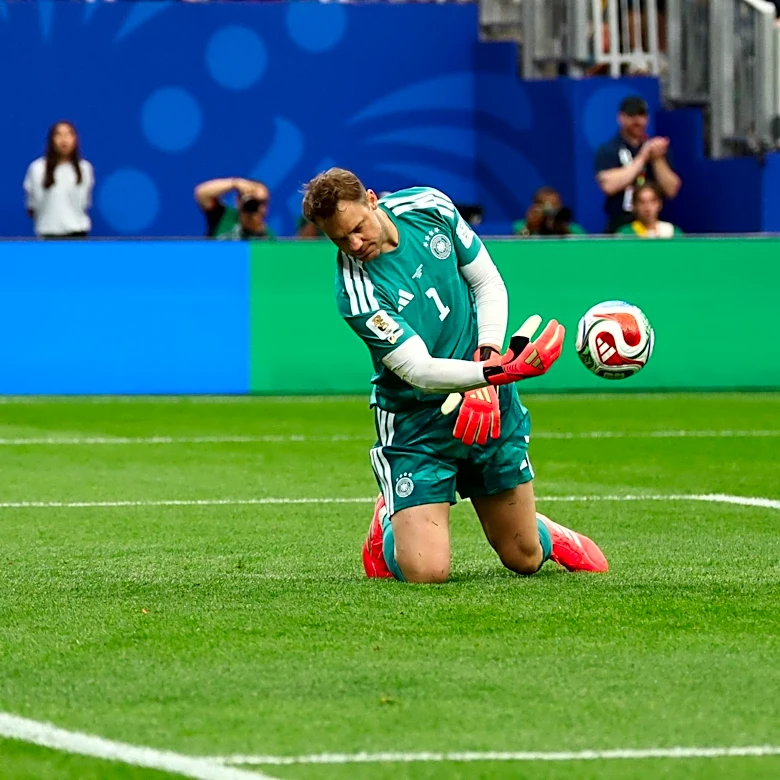
There’s nothing else quite like it. A baseball closer jogs in from the bullpen, but he has a catcher and fielders behind him. A quarterback has ten other men on his side. But the goalkeeper, after huddling with his team, must turn and walk away from them.
He heads toward a lonely 24-foot-wide stage, with the world’s attention contracting to the space between him and a small white spot 12 yards away. The noise of the stadium becomes a muffled roar, an external pressure cooker for an internal monologue of doubt, strategy, and hope. This walk separates the keeper from his tribe. For the last two hours, every success and failure was shared. Now, the fate of the crest on his chest rests squarely, and unfairly, on his shoulders alone.
An Unwinnable Game of Chance
The brutal math of a penalty kick is grotesquely skewed against the goalkeeper. A well-struck shot from 12 yards gives a keeper fractions of a second to decide where to go, launch their body, and cover a massive area. The odds are, frankly, terrible. The expectation is that the striker will score. This fundamental imbalance is what makes the shootout so psychologically torturous for the keeper and so captivating for us. The striker is expected to succeed; failure is a crushing burden. The keeper is expected to fail; success is pure, unadulterated heroism. They are not there to meet expectations, but to defy them. Every save is a minor miracle, a statistical anomaly that rips the script to shreds. Failure to make a save is simply a return to the mean, but it never feels that way. It feels like a personal failing, repeated in five agonizing acts.
The Theater of Mind Games
Because the physical challenge is so immense, the great goalkeepers turn the penalty area into a theater of psychological warfare. This is their only true advantage, the one place they can wrest control from the striker. Think of Liverpool legend Bruce Grobbelaar and his “spaghetti legs” routine in 1984 European Cup final, a wobbly-kneed dance of absurdity that seemingly unnerved Roma’s players. Or Argentina’s Emiliano Martínez in the 2022 World Cup final, a master of the dark arts—delaying, cajoling, and exuding a ferocious confidence that visibly rattled his French opponents. He wasn’t just trying to save the ball; he was trying to get inside the shooter’s head, to plant a seed of doubt that would make their leg feel heavy and the goal suddenly seem smaller. This performance is as crucial as the dive. It’s the keeper’s attempt to rewrite the rules of the encounter before the ball is even kicked.
A Career in a Single Moment
This is why the walk feels like a legacy trial. In these few minutes, a keeper’s entire career can be redefined. They can be a solid, dependable professional for 15 years, but if they become a hero in a legendary shootout, that is their new identity. Jerzy Dudek will forever be the hero of Istanbul 2005. Tim Krul was famously subbed on for the Netherlands in the 2014 World Cup purely for his penalty-saving prowess, and his subsequent heroics cemented his place in Dutch football lore. The outcome is binary: you are either the savior or the one who could not stop the inevitable. There is no middle ground. Years of consistent performance can be overshadowed, for better or worse, by five dives. It is the ultimate test of nerve, where a player’s entire professional story is placed on the line, to be judged by their ability to conquer an almost impossible task.