








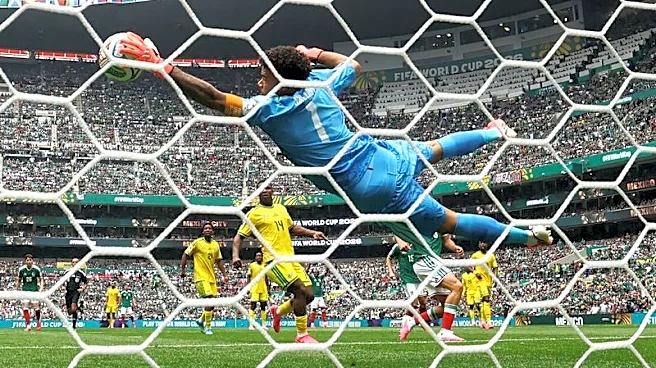


1. Pick a Side, Any Side
First thing’s first: you need a team. Forget deep analysis. Your goal is emotional investment. Here are three easy ways to choose. The Underdog: Is there a team that scraped through against all odds? A smaller nation that knocked out a giant? That’s your
team. Everyone loves a Cinderella story. The Juggernaut: Is there a traditional powerhouse—a Brazil, Germany, or France—that’s expected to win? Rooting for them is like cheering for the New York Yankees. It’s a low-risk, high-expectation choice. The Star Player: Is there one magnetic player lighting up the tournament? Think Messi or Ronaldo in their prime. You’re not rooting for a country; you’re rooting for a legend to cement their legacy. Pick one and ride with them, no apologies.
2. Know the Main Character
Every great story needs a protagonist, and a tournament final is no different. There will be one or two players who dominate the conversation. It might be an aging superstar on their last quest for glory, a young phenom announcing their arrival on the world stage, or a goalkeeper who has been an unbeatable wall. Find out who that person is. Learn their name, their club team (e.g., “He’s amazing for Real Madrid, too”), and one key fact about their tournament journey. When they get the ball, you’ll understand the collective gasp or cheer in the room. This single piece of knowledge elevates you from a casual observer to an informed fan instantly.
3. Grasp the Dominant Narrative
Beyond the players, there's always a bigger story. Has the tournament been defined by controversy? Perhaps Video Assistant Referee (VAR) decisions have been contentious, and every big call is now under intense scrutiny. Is the theme redemption? Maybe a team that suffered a humiliating exit four years ago is now on the brink of triumph. Or is it a clash of styles—the high-flying attacking team versus the ruthlessly organized defensive squad? Understanding this macro-story gives you the context for the drama. You’re not just watching 22 people kick a ball; you’re watching the climax of a month-long saga.
4. Master One Smart Talking Point
You don’t need to be an expert tactician. You just need one observation that makes you sound like you’ve been paying attention. Here are some evergreen options you can adapt. “They look so vulnerable on the counter-attack.” (Use this when the team you’re rooting against loses the ball and the other team streams forward quickly). “Their midfield is completely controlling the tempo of this game.” (Use this when one team seems to have the ball all the time and is calmly passing it around). “You have to wonder if fatigue is becoming a factor.” (Perfect for the last 20 minutes of the game, especially if it goes to extra time). Deploy it once, then sit back and nod knowingly.
5. Understand the Rules That Matter
Forget the minutiae. Focus on the rules that generate the most drama and confusion. First, Offside: In simple terms, an attacker can't be ahead of the last defender when the ball is played forward to them. It’s tricky, often decided by millimeters thanks to VAR. Just know that a promising attack can be erased by it in an instant. Second, VAR: The Video Assistant Referee is a team of officials watching the game on screens who can advise the on-field referee to review major incidents like goals, penalty kicks, and red cards. It creates long, agonizing pauses filled with suspense. Finally, the Penalty Shootout: If the game is tied after 120 minutes (90 minutes of regulation plus 30 minutes of extra time), it’s decided by a series of one-on-one shots from the penalty spot. It is the most nerve-wracking finale in all of sports.