
The Journey We All Remember
For over two decades, Finding Nemo has held a special place in our hearts as a vibrant, thrilling adventure about a father crossing the ocean to find his lost son. The story is driven by Marlin, a clownfish
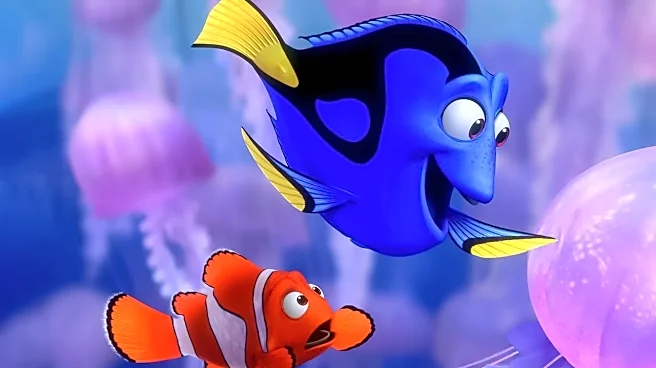
whose personality is defined by a single, horrific event: the barracuda attack that claimed his wife, Coral, and all but one of his children. This trauma transforms him into one of the most overprotective parents in cinematic history. His entire existence revolves around preventing any harm from befalling his only son, Nemo. When Nemo is captured by a diver, Marlin's quest isn't just a rescue mission; it's a frantic race fueled by love, guilt, and all-consuming fear. His journey forces him to face the dangers he always knew were there, from vegetarian sharks to a forest of deadly jellyfish.
The Moment Inside the Whale
The scene that changes everything isn't loud or action-packed. It comes after Marlin and his forgetful companion, Dory, have been swallowed by a blue whale. Trapped inside the massive creature's mouth, Marlin is at his lowest point. He panics as the whale's tongue begins to lift them towards the blowhole. Dory, trusting her ability to "speak whale," insists they're being told to let go and that everything will be fine. Marlin, whose entire philosophy is built on not letting go, refuses to listen. He desperately tries to hold on, fighting against the inevitable. This moment is often remembered as just another quirky obstacle, a funny bit with Dory's communication skills. But it’s much more; it's a direct challenge to Marlin's core trauma.
More Than Just a Funny Roadblock
This scene is the emotional turning point of the entire film. Every other challenge Marlin faces, he tries to control or outsmart. He wants to swim over the trench, not through it, because he thinks it’s safer. He tries to race through the jellyfish, relying on his own flawed judgment. Inside the whale, however, he is completely powerless. For the first time, he is faced with a situation where holding on tighter won't save him. The only path to survival is to do the one thing he swore he would never do again: let go and trust. When Dory tells him, "He says it's time to let go! Everything's going to be okay," she's not just translating whale-speak; she's verbalizing the lesson Marlin has been avoiding for years.
How It Redefines Marlin's Arc
Marlin’s decision to finally trust Dory and release his grip is the moment his real healing begins. It’s a profound act of surrender. Without this breakthrough, his final, heroic act at the end of the film wouldn't carry the same weight. When Dory is caught in a fishing net, Nemo knows he can save her by leading the other fish to swim down. He looks to his father for permission, and Marlin, remembering his lesson inside the whale, says, "Go on, son." He is finally able to let go, not out of despair, but out of faith in his son and the world around him. The whale scene is the crucible that forges this new trust. It proves that Finding Nemo isn't just about a father finding his son; it's about a traumatized individual learning to live again.
Rewatching With New Eyes
When viewed through this lens, the whale sequence transforms from a clever plot device into the story's emotional anchor. It’s the therapy session Marlin desperately needed, administered by a forgetful blue tang and a giant mammal. This understanding elevates the film from a simple adventure to a more complex narrative about overcoming PTSD and learning that true protection doesn't come from control, but from trust and resilience. The promise he made to Nemo in the anemone—"I will never let anything happen to you"—was an impossible one born of fear. His new promise, unspoken but demonstrated, is that he will trust Nemo to navigate life, even when it's scary.