
The Freedom of Low Expectations
Imagine you’re Brazil or Germany. Anything less than a semifinal appearance is a national crisis. The pressure from media, fans, and history itself is immense. Every pass is scrutinized, every mistake
amplified. Now, imagine you’re Morocco in 2022 or Iceland in 2018. The world expects you to lose gracefully. Your country is just thrilled you qualified. This psychological imbalance is a massive advantage for the underdog. While the giants play with the weight of the world on their shoulders, the “small” teams play with a sense of freedom. Failure isn't really failure when no one expected you to succeed in the first place. This allows them to take risks, to play with an unburdened joy and aggression that can completely unsettle a team that’s playing not to lose, rather than playing to win.
A System Stronger Than Stars
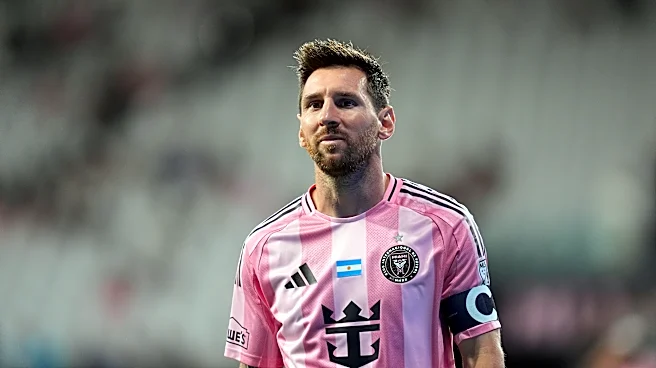
You can’t out-talent France or Argentina if you don't have a Kylian Mbappé or Lionel Messi. So, you don’t try. Instead, underdog teams often win by building a tactical system that neutralizes individual brilliance. The most common approach is the “low block,” a highly organized defensive fortress. This involves packing players behind the ball, denying space in dangerous areas, and frustrating the opponent’s creative stars. It can look defensive, even boring, but it’s incredibly difficult to break down. Morocco’s historic run to the 2022 semifinals was a masterclass in this. They conceded just one goal (an own goal, at that) in their first five matches against teams like Croatia, Belgium, Spain, and Portugal. They frustrated their opponents into exhaustion, then struck decisively on the counter-attack. It’s the soccer equivalent of rope-a-dope: absorb the punches, tire out the champion, and land a knockout blow when they least expect it.
When Talent Aligns
While we call them “small” teams, the modern game has leveled the playing field. Globalization means that a player from a small footballing nation doesn't have to stay there. The best players from countries like Morocco, Croatia, or Senegal are often playing week-in, week-out for top clubs in Europe’s elite leagues—Real Madrid, Chelsea, Paris Saint-Germain. Morocco’s 2022 squad featured stars from PSG (Achraf Hakimi) and Chelsea (Hakim Ziyech). Croatia’s decades of success have been built on midfielders who have dominated for Real Madrid and Inter Milan. So while the nation itself may be small, the team is often a “golden generation” of talent that has been battle-hardened at the highest level of club soccer. They are not intimidated by big names because they play with and against them every weekend. When this talent aligns, a small nation can suddenly field a team with world-class quality in key positions.
More Than Just a Game
For the legacy powers, the World Cup is about adding another star to the jersey. For the underdogs, it’s about putting their country on the map. This creates a profound and unifying sense of purpose that can’t be manufactured. When Morocco became the first African and Arab nation to reach a World Cup semifinal, they were playing for more than just a trophy; they were playing for the pride of a continent and a culture. Players speak of feeling this energy from their people, a sense that they are part of a historic mission. This collective spirit fosters an incredible bond within the squad, turning a group of individuals into a cohesive, unshakeable unit. They fight for every ball, cover for each other’s mistakes, and celebrate every small victory with a passion that can overwhelm opponents who are, by comparison, just doing a job.