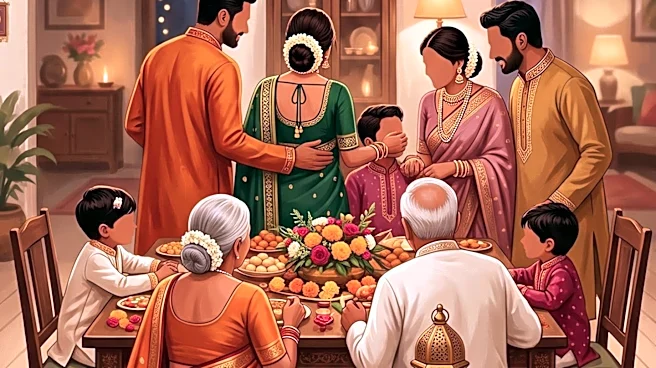








The scene is familiar: the aroma of turkey, the clinking of silverware, the low hum of conversation. Then, suddenly, nothing. A thick, heavy silence descends upon the Thanksgiving table. It's more than just an absence of noise, isn't it?
The Anatomy of a Holiday Silence
We've all been
there. The conversation is flowing, then someone says something... and the conversational rhythm breaks. Studies show that a pause in conversation starts to feel uncomfortable after about four seconds. This isn't just a lull; it's a moment loaded with social information. Psychologically, a smooth, flowing conversation is associated with belonging and social validation. When that flow is disrupted, it can trigger primal feelings of rejection or exclusion, even if only for a moment. The Thanksgiving table, a space meant to reinforce family bonds, becomes a stage where these micro-dramas play out between bites of stuffing. The silence isn't empty; it’s filled with what everyone is pointedly not saying.
The Post-Controversial Comment Hush
This is the silence we know best. It’s the sonic crater left after a relative drops a political hot take or a deeply personal, unsolicited question. One person’s 'interesting remark' is another's conversation-killer. In these moments, silence is a form of mass communication. It can be a collective, unspoken agreement to not engage and escalate the conflict. Many family members may choose 'expressive suppression'—a conscious decision to hold back their emotional response to keep the peace. This quiet is a strategic retreat, a boundary drawn without a single word being spoken. It's a testament to the fact that sometimes, the most important part of a family conversation is the part that doesn't happen.
The Generational Sound Gap
Often, the silence at the table isn't about a specific comment but a broader communication divide. Different generations often operate on different conversational wavelengths. What feels like a normal pause for one person might feel like an eternity to another, shaped by everything from life experience to the pacing of social media. Younger generations might retreat to their phones, creating a visual and auditory silence that can be misinterpreted by older family members. Meanwhile, older relatives might fall back on stories that don't land, creating a different kind of quiet. These silences aren’t necessarily hostile; they are the audible gaps between different cultural contexts and communication styles sharing the same gravy boat.
The Silence of Mutual Exhaustion
Let's be honest: Thanksgiving is a marathon. Between the cooking, the travel, and the pressure to connect, social batteries drain. Sometimes, a silence descends simply because everyone has run out of things to say. After the initial catch-ups are done and the main topics are exhausted, a natural lull can occur. This silence isn't necessarily awkward; it can be comfortable, a sign of intimacy among people who don't feel the need to fill every second with chatter. It’s the quiet companionship of people who have known each other for years. It's the shared, food-coma-induced peace that says, 'We're all in this together, and we're all very, very full'.