





The Star as the Author
In the Hollywood of the 1970s and '80s, Burt Reynolds wasn't just the biggest movie star in the world; he was a brand. And no one understood that brand better than him. For Reynolds, a script was often more of a suggestion than a set of rules. He saw
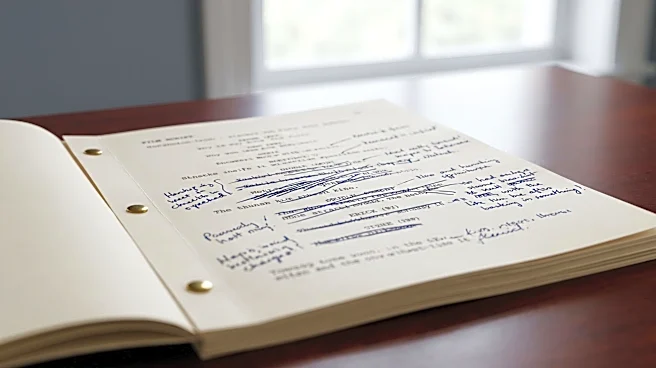
himself as the ultimate guardian of the charismatic, fast-talking, good-ol'-boy persona that audiences loved. If a line didn't sound right for the character—or more accurately, for the version of Burt Reynolds he was playing—he simply changed it. This wasn't just ego; it was a form of creative control. Reynolds was fiercely protective of his work and his connection with the audience, and he believed that authenticity, even in a high-speed car-chase comedy, was paramount. He was known for being passionate about his craft, and if he felt a project was a "piece of shit," as he once put it, he would still try to bring his own spark to it rather than just collect a paycheck.
Smokey and the Bandit: The Power of Improv
Nowhere is Reynolds's authorial instinct more evident than in his most iconic film, Smokey and the Bandit. Upon reading the first draft, Reynolds reportedly told director and longtime stuntman Hal Needham it was the worst script he had ever seen—but he'd make the movie anyway. The production became a masterclass in collaborative improvisation. Much of the film's classic dialogue was made up on the spot, particularly the flirtatious banter between Reynolds's Bandit and Sally Field's Carrie. This ad-libbed approach gave their chemistry a natural, unscripted feel that became the heart of the movie. Even legendary comedian Jackie Gleason, who played Sheriff Buford T. Justice, was given free rein to improvise his scenes, contributing some of the film's most memorable moments. The result was a film that felt joyfully alive, a testament to Reynolds's belief that sometimes the best moments can't be found on the page.
Clashing with the Auteurs
While freewheeling directors like Hal Needham encouraged Reynolds's input, not everyone was so accommodating. His method famously clashed with that of writer-director Paul Thomas Anderson during the making of 1997's Boogie Nights. Reynolds, who was deeply uncomfortable with the film's subject matter, turned down the role of porn director Jack Horner seven times before finally accepting. On set, the tension between the old-school movie star and the young, meticulous director was palpable. Reynolds reportedly disliked Anderson's directing style, feeling he was being disrespected by the younger filmmaker. This friction led to heated confrontations, with Reynolds nearly coming to blows with Anderson. Despite the on-set strife, Anderson later noted that the real-life intensity arguably helped the film's dramatic scenes. Reynolds went on to earn an Academy Award nomination for the role but remained so unhappy with the experience that he fired his agent after seeing a rough cut.
More Than Just Jokes
Reynolds's desire to rewrite lines wasn't just about punching up jokes or adding more charm. It was rooted in a deep understanding of character and story. He had a strong instinct for what worked and, more importantly, what his audience expected from a "Burt Reynolds picture." In his later years, he even founded an acting institute in his home state of Florida, where he taught master classes, passing on his knowledge of the craft to a new generation of performers. He was dedicated to teaching and inspiring students, sharing the passion he had for the industry. This impulse to shape his own material was the same one that drove him to do his own stunts for much of his career—a desire to be fully invested in the final product. Whether he was improvising a laugh line in a Trans Am or fighting for a character's integrity against a director, it all came from the same place: an unshakeable belief that he knew how to entertain.