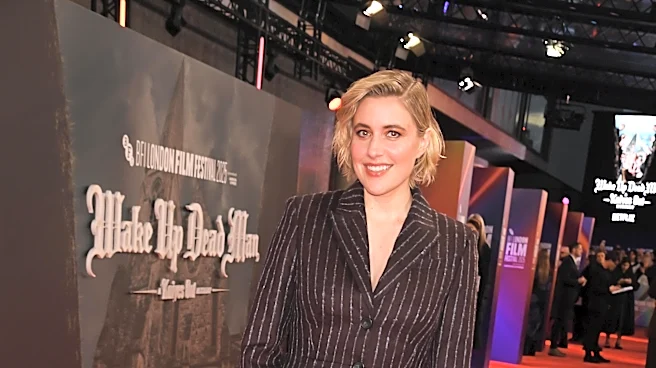





The news is official: Greta Gerwig, the singular talent behind 'Lady Bird' and 'Little Women', is heading to Narnia. She's set to write and direct at least two new films for Netflix, plunging audiences back into the world C.S. Lewis created.
The Foundational Epic: The Lion, the Witch and the Wardrobe
Before you
can appreciate a new interpretation, you have to master the original text. For the Narnia film series, that text is 2005’s 'The Lion, the Witch and the Wardrobe'. This is the movie that laid the groundwork, successfully translating the awe and wonder of Lewis’s most famous book to the big screen. It introduced the Pevensie siblings, established the stakes of Aslan’s sacrifice, and made the White Witch a genuinely terrifying screen villain. A rewatch isn’t just about nostalgia; it’s an exercise in understanding the core DNA of this universe. What rules did it establish? What visual language defined its magic? Gerwig’s films will exist in conversation with this one, whether she follows its template or deliberately breaks from it. Pairing it with a viewing of her 'Little Women' is a fascinating exercise. Both films center on a set of four siblings navigating a world of immense expectation and looming conflict, trying to find their individual places within a powerful family unit. Watching them back-to-back reveals the thematic threads Gerwig might pull on.
The Coming-of-Age War Story: Prince Caspian
If 'The Lion, the Witch and the Wardrobe' is about discovery, 'Prince Caspian' is about disillusionment. The Pevensies return to a Narnia that has forgotten them, where their castle is in ruins and the magic has seemingly faded into myth. It’s a darker, more mature story about growing up and realizing the world has moved on without you. This is pure Gerwig territory. Her films excel at capturing the bittersweet pain of adolescence and the struggle to reconcile who you were with who you are becoming. 'Prince Caspian' is essentially a coming-of-age story disguised as an epic fantasy. The children are no longer just children; they are kings and queens forced to lead an army, grappling with doubt and pride. Peter’s struggle for control and Lucy’s unwavering faith feel like exactly the kind of character-driven conflicts Gerwig loves to explore. Watching this film is the perfect way to prime yourself for the emotional complexity she is sure to bring to the franchise. It’s the entry that proves Narnia can be more than a simple allegory, capable of supporting genuine, messy human drama.
The Fantastical Voyage: The Voyage of the Dawn Treader
This is the weird one, and that’s what makes it essential viewing. Where the first two films are grounded in a fairly traditional structure of prophecy and warfare, 'The Voyage of the Dawn Treader' is an episodic, seafaring adventure that feels more like a collection of fables. Lucy and Edmund are swept into Narnia with their insufferable cousin, Eustace Scrubb, on a quest to find seven lost lords. The journey involves a cursed treasure that turns Eustace into a dragon, a confrontation with their own fears on a dark island, and a trip to the literal edge of the world. Its structure is less rigid, its themes more existential. This film demonstrates the narrative elasticity of the Narnia universe. It proves that a story set in this world doesn’t have to be about a battle for the throne. It can be a strange, personal, and unpredictable journey. For a director as inventive as Gerwig, 'Dawn Treader' represents the creative freedom she could embrace. It’s a reminder that Narnia contains multitudes, from epic wars to bizarre island-hopping odysseys. It’s the perfect movie to watch to expand your own imagination about what a new Narnia story can even be.