


More Than Just a Bonfire
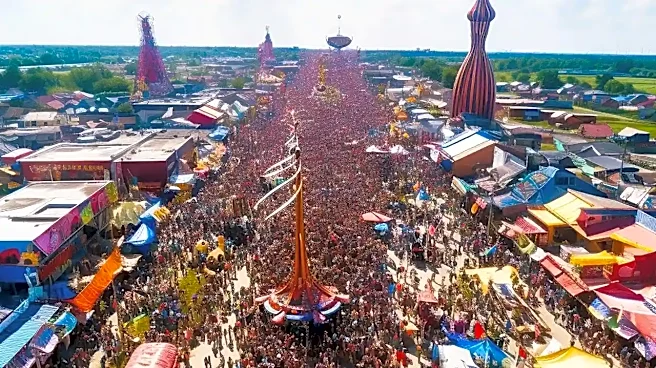
To understand the burn, you have to understand the city. Black Rock City isn't a festival; it’s a temporary metropolis dedicated to principles like radical self-expression, communal effort, and leaving no trace. For one week, tens of thousands of people
build a society from scratch in a hostile desert environment. The giant wooden “Man” stands at the center of it all, a silent overseer to a week of connection, struggle, and creativity. The Saturday night burn isn’t just the end of a party; it’s the grand, communal finale to a massive social and artistic experiment. It’s a full-body experience: the percussive blast of heat, the roar of the crowd, and the sight of something so huge and central disappearing into the night sky.
A Blank Slate for Hopes and Fears
A key to the Man’s power is that he officially stands for nothing—and therefore can mean everything. For some, he’s a symbol of “the man” in the corporate or patriarchal sense, and burning him is an act of rebellion. For others, he represents personal baggage: a failed relationship, a dead-end job, or a painful memory they’re ready to release. Many view it as a moment of rebirth or a break with the past. Because the effigy is a deliberately neutral figure, attendees project their own narratives onto it. When it burns, they aren't just watching wood and neon go up in smoke; they're witnessing a physical manifestation of their own internal struggles or aspirations being consumed and transformed by flame. The spectacle is whatever you need it to be.
The Power of a Shared Ritual
Humans are wired for ritual, and the Man burn is a potent modern example. In a world that can feel isolating, gathering with thousands of others to focus on a single, momentous event creates a profound sense of connection, something sociologists call “collective effervescence.” Researchers have found that these kinds of mass gatherings can create intense social bonds and feelings of unity that last long after the event. The experience is multisensory and overwhelming, designed to take you out of your comfort zone and into a state of awe. As fire dancers circle and the structure groans, a deep silence often falls over the crowd just before the final collapse—a shared, sacred breath before a collective, cathartic roar. This communal processing of a peak moment is something increasingly rare in daily life.
The Catharsis of Impermanence
At its core, Burning Man is an exercise in impermanence. Participants spend immense time, money, and effort to build elaborate art, theme camps, and a functioning city, all with the knowledge that it will all be gone in a week. The Man burn is the ultimate expression of this principle. It’s a deliberate act of letting go on a grand scale. Psychologically, this scheduled destruction acts as a powerful catharsis. It’s a reminder that all things are temporary, from the week’s joys and hardships to life’s larger struggles. This isn’t a tragedy; it's a celebration of the cycle of creation and destruction, death and rebirth. For many, watching the Man fall is not an ending but a punctuation mark—a powerful, emotional release that clears the way for whatever comes next.