

The Architect of Ambiguity
To understand the “why,” you have to start with the director himself. Stanley Kubrick was a notorious perfectionist known for his detached, analytical style and his tendency to layer his films with visual information. Unlike the Stephen King novel it's
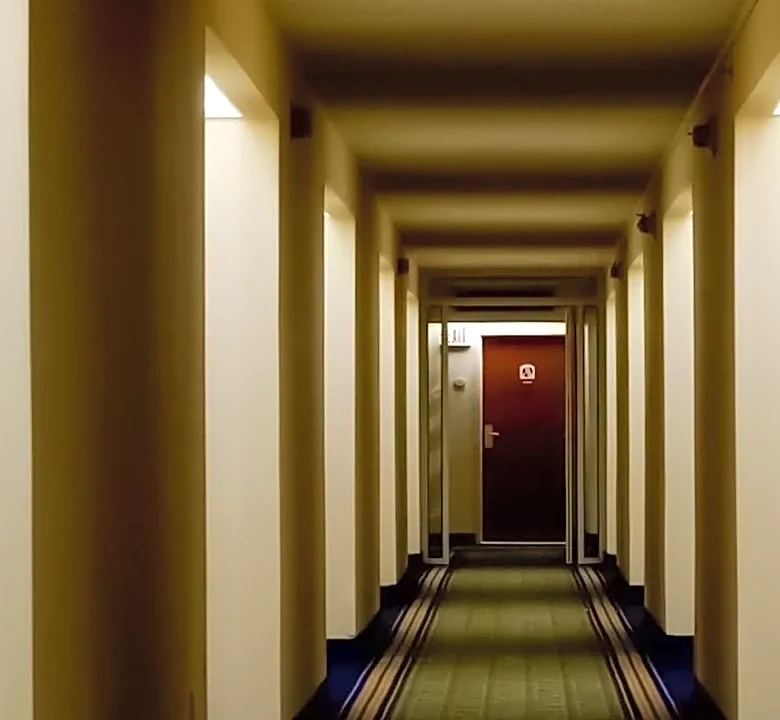
based on—which Kubrick significantly altered—the film is cold, ambiguous, and filled with moments that feel deliberately strange. Kubrick’s camera doesn't just capture scenes; it glides through the Overlook Hotel with an unnatural smoothness, like a spectral presence. This controlled, often symmetrical framing creates a sense of entrapment and unease, making the viewer feel like they are being watched by the hotel itself. He resisted easy explanations, forcing the audience to look closer and question what they were seeing. This filmmaking style created the perfect fertile ground for interpretation, inviting viewers to become detectives.
Theory: A Buried History of Genocide
One of the most compelling and widely discussed theories is that “The Shining” is an allegory for the genocide of Native Americans. The film, unlike the book, explicitly states the Overlook Hotel was built on an Indian burial ground. Proponents of this theory point to the pervasive Native American motifs in the hotel’s decor, from the patterns on the rugs to the artwork on the walls. A key piece of supposed evidence is the prominent placement of Calumet baking powder cans in the hotel’s pantry scenes; a calumet is a Native American peace pipe. The famous scene of blood pouring from the elevators is interpreted not just as a vision of future horror, but as a tidal wave representing the blood shed during America's westward expansion. Even the film’s July 4th party setting is seen as a clue, a symbol of an American identity built on an overlooked, violent past.
Theory: A Confession for Faking the Moon Landing
Perhaps the most outlandish, yet enduring, theory is that Kubrick used “The Shining” to secretly confess his involvement in faking the 1969 Apollo 11 moon landing. The idea posits that the U.S. government, fearing a failed mission during the Cold War, hired the director of “2001: A Space Odyssey” to stage the entire event. The evidence? Danny wears an Apollo 11 sweater in several key scenes. The haunted room, changed from 217 in the book to 237 in the film, is supposedly a reference to the average distance of the moon from Earth (approximately 237,000 miles). Other “clues” include the hexagonal pattern on the carpet resembling a launch pad and the presence of Tang, the drink famously associated with astronauts, in the hotel's pantry. Though widely debunked, this theory remains a testament to the film's power to make people see patterns everywhere.
Theory: The Impossible Architecture
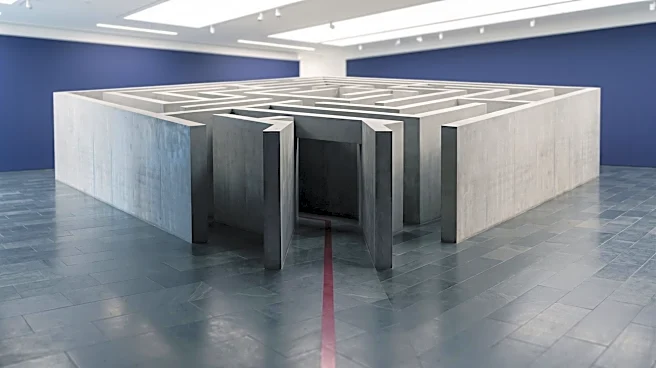
Some theories focus less on historical allegory and more on the film's physical space. Analysts have meticulously mapped the Overlook Hotel and discovered that its layout is geographically impossible. Hallways lead to nowhere, doors appear and disappear, and hotel manager Stuart Ullman’s office has a window that looks outside, despite being located deep within the hotel's interior with other rooms surrounding it. These spatial anomalies aren't filmmaking mistakes; they are seen as deliberate choices by Kubrick to create a disorienting, dream-like environment. The hotel becomes a psychological labyrinth, mirroring the characters' descent into madness. The hedge maze at the end is the most literal representation of this, a place where logic breaks down and Jack Torrance becomes as lost physically as he is mentally. This impossible architecture reinforces the idea that the Overlook is not a real place, but a state of mind.