




The Perfectionist and the Epic
When MGM decided to remake Ben-Hur in the 1950s, the production was one of the most ambitious in history. To helm the biblical epic, they needed a director who could handle immense scale without losing sight of the human story. They found him in William
Wyler. A German-born filmmaker, Wyler was a master craftsman known for his meticulous attention to detail and his ability to elicit profound performances. He earned the nickname "40-Take Wyler" for his relentless pursuit of perfection, a method that could be exasperating for his actors but often led to Oscar-winning results. Charlton Heston, already a star from epics like The Ten Commandments, was cast in the lead role of Judah Ben-Hur, a Jewish prince betrayed into slavery by his Roman friend Messala. The actor's rugged physicality made him a natural fit for heroic roles, but Wyler saw the potential for something deeper.
'You Have to Be Better'
Early in the production, Wyler pulled Heston aside and delivered a blunt, unsettling critique. "Chuck, I've thought about your performance... and you're going to have to be better," Wyler told him. When Heston asked for specific guidance, the director offered none, simply stating, "I don't know. I just know you have to be better." This was Wyler's method: he forced actors to dig deeper and find the truth of the character on their own, often through sheer exhaustion and repetition. Some actors found the process intolerable, but Heston, though initially shaken, rose to the challenge. The director pushed Heston beyond his instinct to play the hero, demanding a more complex and emotionally vulnerable performance. This tension was especially apparent in their debates over the film’s central relationship between Ben-Hur and Messala, with Wyler insisting on a rich, layered dynamic that fueled the story's tragic power.
Trial by Chariot
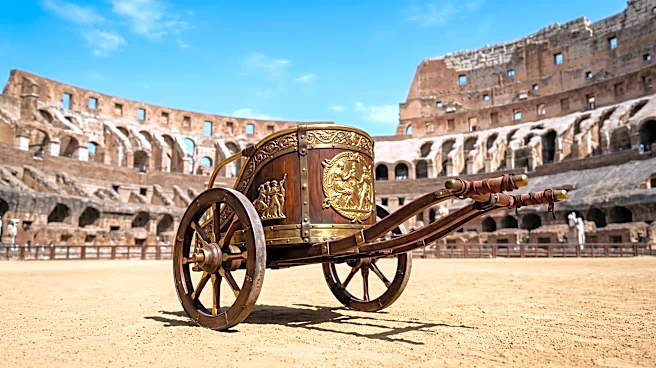
The director’s demands were not just emotional but intensely physical. The film's legendary chariot race remains one of the most thrilling action sequences ever filmed, a testament to practical filmmaking on a terrifying scale. For weeks, Heston trained to master the four-horse chariot. Wyler, who had worked as an assistant on the 1925 silent version of Ben-Hur, knew the dangers involved and was determined to capture the visceral reality of the race. Beyond the arena, Wyler guided Heston through the character’s most profound spiritual moments with equal intensity. The director, who was himself Jewish, was committed to making a film that resonated across different faiths, handling the scenes involving Jesus with a powerful, understated reverence that grounded the epic spectacle in something deeply human.
From Frustration to a Rose
Despite the grueling process, Heston’s respect for Wyler grew into profound admiration. He later summarized the experience with a now-famous quote: "Doing a picture with Willie Wyler is like getting the works at a Turkish bath. You damn near drown, but you come out smelling like a rose." The performance that Wyler pushed him to deliver earned Heston the Academy Award for Best Actor in 1960. The film itself was a triumph, winning a record-breaking 11 Oscars, including Best Picture and Best Director for Wyler. Heston had arrived on set as a movie star known for playing heroes. He left as a respected actor who had proven his ability to convey immense emotional depth, a transformation made possible by a director who refused to settle for anything less than everything his star had to give.