







The Trouble with the Washington Biopic
There’s a reason Hollywood has struggled to produce a definitive George Washington biopic. The man himself is an icon, so revered that he’s more monument than character. A filmmaker has two choices, neither of them great: either lean into the myth, creating
a hagiography that feels more like a history lesson than a drama, or attempt to find the 'real' man, a task fraught with its own perils. A story that tries to humanize him by focusing on his flaws risks backlash, while one that polishes them away becomes dramatically inert. His defining characteristics—dignity, reserve, and a knack for holding things together—are virtues for a president but can be dramatically flat. It's hard to build a compelling narrative around a central character whose greatest strength was his steadiness when drama demands conflict.
A Cast of Rivals and Reluctant Rebels
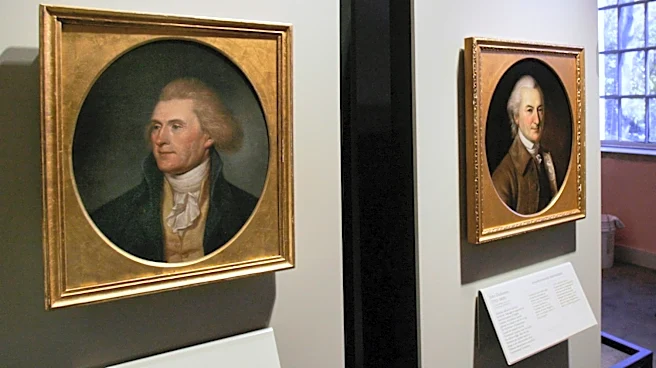
Now, shift your focus from the battlefield to a stuffy room in Philadelphia. This is the setting for the Continental Congress, and it’s a goldmine of dramatic potential. You have a cast of characters that a novelist would kill for. There's the brilliant, passionate, and often obnoxious John Adams, clashing with everyone. You have the wealthy and cautious John Dickinson, a man known as the "Penman of the Revolution" for his eloquent arguments against British overreach, who nonetheless argued passionately against declaring independence, fearing it was a premature and catastrophic step. Dickinson was so opposed that he abstained from the final vote, yet later joined the militia to fight. Then you have the radicals like Samuel Adams, the pragmatists like Benjamin Franklin, and the ambitious John Hancock, all navigating a treacherous landscape of regional interests, personal egos, and genuine ideological divides. This isn't a story about one man; it's an ensemble piece about a volatile collection of lawyers, merchants, and farmers trying to invent a country on the fly.
High-Stakes Procedural Drama
The core of a Continental Congress anthology wouldn't be battles, but arguments. The series would be a political thriller where the stakes are nothing less than the birth of a nation. Imagine the debates, which were far from unanimous. The colonies were deeply divided, with some delegates arriving with specific instructions not to vote for independence. The process was a messy, contentious affair, full of compromises, backroom deals, and near-failures. They had to create an army from scratch, appoint a commander, issue currency, and seek foreign allies, all while technically being traitors to the crown. The initial attempt to reconcile with King George III, the Olive Branch Petition, was written by the conciliatory Dickinson, but its failure only strengthened the hand of the radicals. A series could dedicate entire episodes to the drafting of the Declaration of Independence, the frantic negotiations over the Articles of Confederation, or the moral conflicts over slavery—issues that were argued with life-or-death intensity.
A Messier, More Honest History
A traditional biopic often simplifies history into the story of a great man's vision. An anthology about the Continental Congress would do the opposite. It would tell a messier, more complicated, and ultimately more honest story about how change actually happens: not through the singular will of one hero, but through the grinding, frustrating, and inspiring process of collective action. It’s a story of flawed people reaching for monumental ideals and often falling short. This narrative resonates more deeply in the 21st century than a sanitized 'great man' story. We are more aware of the complexities and contradictions of our history, and an ensemble drama can explore those nuances in a way a biopic rarely can. Seeing the founders not as marble statues, but as bickering, brilliant, and terrified human beings, makes their achievement all the more remarkable.