






The Problem with Floating
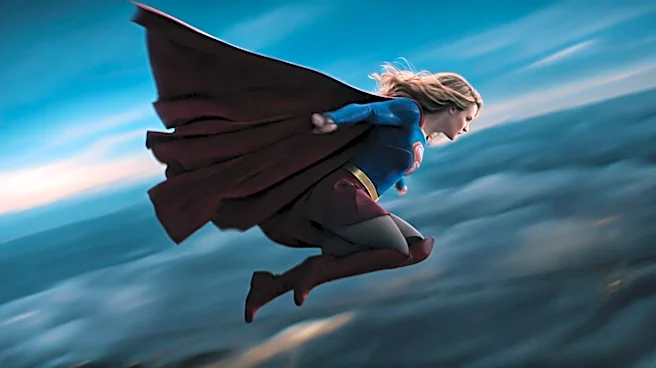
We’ve all seen it. A hero zips across the sky, changes direction on a dime, and hovers in place as if gravity is just a mild suggestion. While visually impressive at first, this effect quickly loses its impact. When flight lacks a sense of mass, momentum,
and consequence, it becomes sterile. The character feels less like a physical being and more like a digital asset being dragged across a screen. This “weightlessness” isn’t just a physics problem; it’s a storytelling one. If a hero’s greatest power feels effortless and disconnected from the world around them, the stakes feel lower. There’s no strain, no struggle, and therefore, no drama. You can see it in countless CGI-heavy battles where heroes weave through explosions without so much as a ripple in their cape. It’s clean, it’s efficient, and it’s boring. For flight to feel real, the audience needs to believe in the force required to achieve it.
Learning from Her Cousin
To find a solution, the new DCU doesn't have to look far. Zack Snyder’s *Man of Steel* may be divisive, but its depiction of Kryptonian power is widely praised for its visceral, bone-crunching weight. When Henry Cavill’s Superman first learns to fly, it’s not a graceful ascent; it’s a violent, uncontrolled launch. He doesn’t just lift off; he shatters the ground beneath him. His landings aren’t soft touches; they’re crater-inducing impacts. The sound design reinforces this, with sonic booms and the shriek of displaced air selling the immense power and speed. This approach establishes that Kryptonian abilities are a brutal violation of Earth’s physics. They have consequences. Every punch sends shockwaves through buildings, and every flight path feels like it’s tearing a trench through the atmosphere. This is the foundation the new *Supergirl* can build on: treating flight not as a serene superpower but as the application of overwhelming, world-breaking force. It’s a language of impact the audience can understand.
The 'Woman of Tomorrow' Edge
The key to making Supergirl’s power feel earned isn’t just technical; it’s narrative. The upcoming film, *Supergirl: Woman of Tomorrow*, is based on Tom King and Bilquis Evely’s comic series of the same name. This isn't the cheerful, optimistic Kara Zor-El many fans know. This version of Supergirl grew up on a floating remnant of Krypton, watching her family and friends die before she finally made it to Earth. Unlike her cousin, who was a baby when he left a doomed planet, Kara remembers her home. She is a survivor, not just a transplant. This backstory gives her an edge, a weariness, and a simmering rage that a more traditional take lacks. This psychological weight is the perfect anchor for her physical power. When this Supergirl throws a punch, it shouldn’t just be a display of strength; it should feel like she’s channeling years of trauma and loss. Her flight shouldn't be a joyous soar, but a determined, sometimes desperate, act. By grounding her power in her personality, the action scenes gain emotional heft. Her abilities become an extension of her character, not just a special effect.
A Strategy of Cause and Effect
So, what is the Supergirl Strategy? It’s a two-part approach. First, you embrace the brutal physics established in *Man of Steel*. Every action must have an equal and opposite reaction. When she takes off, the environment should buckle. When she stops mid-air, we should feel the g-force and see the turbulence. This requires a commitment to practical and digital effects that emphasize interaction—wind machines whipping debris, wirework that communicates strain, and CGI that simulates atmospheric distortion. Second, you tie that physical weight to the emotional weight of the *Woman of Tomorrow* character. Her fighting style should reflect her past. Maybe it’s less precise than Superman’s but more ferocious. Maybe she pushes herself to the point of exhaustion, showing the physical toll that using her powers takes. Instead of seeing a goddess effortlessly gliding, we would see a warrior pushing her body to its absolute limit. The combination is what makes it work: the visuals show us the impact on the world, and the character shows us the impact on herself.