






The Temptation of the Tilted Camera
Modern blockbuster filmmaking has a nervous tic: the Dutch angle. This is a technique where the camera is tilted, slanting the horizon line. First popularized in German Expressionist films to create a sense of madness or unease, it has since become a lazy
shorthand for “action” and “intensity.” In everything from superhero battles to chase sequences, tilted frames are used to inject a scene with a shot of visual adrenaline. The effect is meant to be disorienting and chaotic, putting the audience on edge. While it can be a powerful tool when used with purpose—to show a character’s world literally turned upside down—it is often overused, becoming a substitute for well-choreographed action or genuine emotional stakes. For a story like 'Moana', which is rooted in stability, knowledge, and a deep connection to the natural world, relying on this kind of manufactured chaos would be a profound mistake.
The Horizon as a Sacred Guide
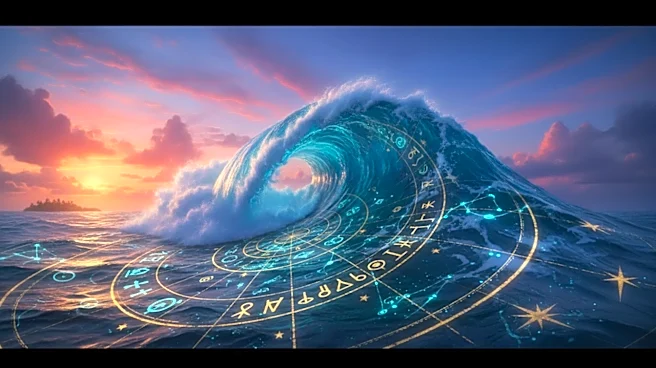
In the world of 'Moana', the horizon is not just a line where the sky meets the sea; it is a map, a guide, and a spiritual constant. Polynesian wayfinding, the ancient art of navigating the vast Pacific Ocean without instruments, is central to the film's narrative. This practice relies on an encyclopedic knowledge of the natural world, where the horizon is the primary canvas. Master navigators use a mental construct, often called a star compass, which divides the horizon into distinct points where stars and the sun rise and set. By memorizing these points and observing the patterns of swells, winds, and wildlife, they can pinpoint their location with astonishing accuracy. The horizon line, in this context, is the ultimate source of stability and truth. It is the unwavering reference point in a world of constant motion. To visually destabilize it with a canted camera angle would be to fundamentally misunderstand and disrespect the very science and spirituality that underpins Moana’s entire journey.
Cinematography Should Tell the Story
The camera isn't a passive observer; its movements and framing are a core part of the storytelling. A low horizon line can make a sky seem vast and epic, while a high one can focus the viewer on the foreground. In 'Moana', the camera's relationship with the horizon should mirror the protagonist’s own development. When she is a child, dreaming of the water but confined to the shore, the horizon can be framed as a distant, almost unattainable goal. As she ventures onto the open ocean, full of uncertainty, the camera might reflect her struggle. But the core of her arc is her transformation into a master wayfinder. As she learns to read the stars and the sea, the camera should grow more confident with her. It should become steady and sure, holding the horizon level to show that she is not lost, but in control. A stable frame demonstrates her harmony with the ocean, not her conflict with it. Tilting the horizon should be reserved only for moments of genuine, life-threatening peril—like the battle with Te Kā—where the world is truly thrown into chaos, making the return to a stable horizon feel like a triumphant homecoming.
A Small Choice, A Big Statement
Director Thomas Kail comes from a theater background, known for his work on 'Hamilton', where he expertly guided complex staging to create a cohesive and powerful narrative. Translating that vision to the epic scale of the Pacific Ocean presents new challenges. The decision to keep the camera work grounded and respectful of the horizon is more than just a technical choice; it's a statement of intent. It signals that the film’s creative team understands that the culture it is portraying is not a mere backdrop for a generic adventure. It shows a commitment to authenticity that goes beyond casting and costume design, embedding cultural respect into the very visual language of the film. In a story about finding your way, the camera must first know its own place. Its place is with a steady hand, an eye for beauty, and a deep respect for the line that guided Moana's ancestors across the sea.