







A Building With a Soul
From its very first appearance, the Arconia is more than just a collection of apartments; it’s a living, breathing entity. Co-creator John Hoffman has noted the building “basically wrote itself into our show as its own central compelling character.” Its
grand, gated courtyard and Italian Renaissance-style architecture aren't just establishing shots—they’re the face of a character that holds decades of New York history and secrets. The exterior shots are filmed at The Belnord, a real landmark on West 86th Street, chosen for the history and elegance needed to house a world of mystery. This real-world gravitas lends the fictional Arconia an immediate sense of permanence and depth. The show treats the building not as a static backdrop, but as an active participant in the narrative, with a personality defined by its hidden histories and eccentric community.
The Vertical Neighborhood
The Arconia’s true scale comes from its function as a vertical neighborhood. In a city of millions, the building creates a surprisingly intimate, if dysfunctional, village. The interactions—awkward elevator rides, tense board meetings, chance encounters in the courtyard—all happen within its confines. It’s a microcosm of the city itself, a place where people from wildly different walks of life are thrown together. The show introduces us to a sprawling cast of residents, from a powerful board president and a cat-obsessed neighbor to visiting celebrities like Sting and Amy Schumer. This dense social tapestry makes the building feel infinitely populated. Each door represents a new story, a potential suspect, or another victim, turning a single address into a complex social ecosystem teeming with life, grudges, and alliances. The building becomes a stage where the drama of a whole community unfolds.
Architecture as a Storytelling Device
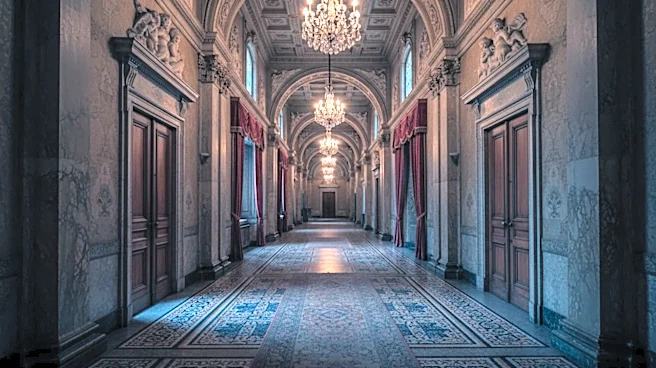
The show’s production design is key to making the Arconia feel boundless. While the exteriors are The Belnord, most interiors—the hallways, lobby, and apartments—are meticulously crafted on soundstages. This allows the creators to build a world perfectly suited for a mystery. Production designer Curt Beech explained that even with the same architectural bones, each apartment is designed to reflect its occupant's history and personality, from Oliver’s theatrical flair to Charles’s orderly, subdued taste. More importantly, the building is filled with secret passageways, nicknamed the “Arcatacombs,” and a hidden elevator. These secret spaces literally expand the building’s geography beyond what’s visible, suggesting that there are layers to the Arconia that even its residents don’t know. This architectural sleight of hand transforms a finite space into a labyrinth of narrative possibility, where every wall might hide a clue.
A Container for Infinite Stories
Ultimately, the Arconia feels so large because it is purpose-built to contain endless stories. The central premise of the show—“Only Murders in the Building”—demands that this single location generate season after season of intrigue. Every new character, from doormen to wealthy residents, adds another thread to the building's narrative fabric. The building's history, from its fictional architect Archibald Carter to its real-world counterpart's scandalous past, provides a deep well of inspiration. The structure is a paradox: a confined space that serves as a gateway to countless human dramas. It’s a physical manifestation of the show's core idea that you don’t need to look far to find a compelling story. Sometimes, the most fascinating, complex, and dangerous world is right inside your own building.