






The Challenge of Lifeless Cloth
In the real world, fabric is a slave to physics. It hangs, folds, and flows based on the body moving underneath it, not to mention the constant pull of gravity. In the miniature world of stop-motion animation, a puppet that's only 10 inches tall faces
a very different problem. A tiny swatch of fabric doesn't behave like its full-size counterpart. It's too stiff, too light, and stubbornly refuses to look like anything other than what it is: a small piece of cloth on a doll. Without the weight and momentum of a human-scale garment, it has no life. The central challenge for animators and costume designers is to overcome this lack of natural physics and imbue these tiny textiles with believable weight, character, and motion, one painstaking frame at a time. Every single fold and ripple must be deliberately created by hand.
An Engineered World of Wires and Stitches
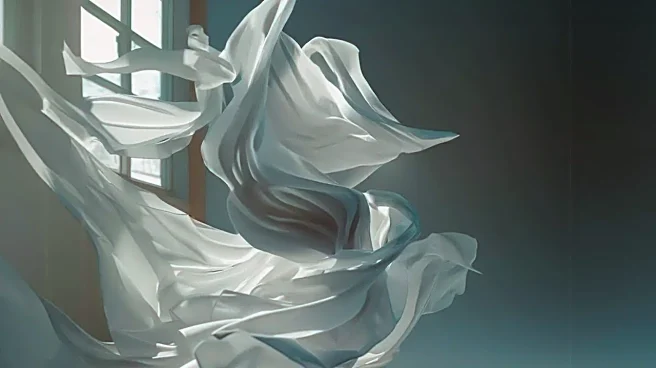
To make fabric perform, animators rely on a hidden, engineered world beneath the stitches. The process starts with costume designers who are as much engineers as they are artists. For a cape to billow majestically, fine wires might be sewn into its hem, allowing an animator to bend it into the perfect arc for one frame, then another, and another. For a shirt to wrinkle just so when a character bends their arm, the fabric itself is carefully selected and sometimes treated. Some studios use materials like Tyvek under silk to create a worn texture or use starch to give a garment a specific, temporary stiffness that can be manipulated between shots. In many cases, the clothing is built with internal armatures—tiny, articulated skeletons of their own—that allow for precise, repeatable movements. These engineered solutions give animators the control they need to make the fabric move, but the real artistry comes in making that movement feel natural.
From Physics to Personality
Once the technical problems are solved, the true magic begins: using fabric to tell a story. The costume department at a studio like LAIKA doesn't just make clothes; they build character. The sharp, tailored suit of Sir Lionel Frost in 'Missing Link' reflects his 'city gent' personality, while the ill-fitting suit he gives to Mr. Link is a source of comedy. This is achieved by animating the clothing with intent. An animator will spend weeks on a single shot, moving a character and their clothing 24 times for every second of film. They study how a real wool sweater bunches versus how a silk dress flows. Coraline's iconic star-patterned sweater, for example, was hand-knitted with needles as thin as hair, allowing it to move with a cozy, handmade feel that defines her character. The movement of the fabric becomes an extension of the puppet’s performance, conveying mood, status, and emotion without a single word.
The Modern Hybrid Approach
While the soul of stop-motion remains in the handcrafted, frame-by-frame process, modern technology plays a crucial supporting role. Animators often use sophisticated software like Dragonframe to plan and execute complex shots, syncing camera movements with the animation. Sometimes, a puppet needs to be held in the air by a rig or clamp to create the illusion of jumping or flying. After the scene is shot, visual effects artists will digitally paint out these rigs, frame by frame. Furthermore, 3D printing allows for the rapid creation of thousands of facial expressions, giving the puppets a nuanced emotional range that was once impossible. This blend of old-school craft and new-school tech allows filmmakers to push the boundaries of what stop-motion can achieve, creating visuals that are both tangibly real and magically impossible.