








The Hand of God: Divine Intervention or Obvious Foul?
It’s 1986, the World Cup quarter-final between Argentina and England. The brilliant, mercurial Diego Maradona leaps for a ball with English goalkeeper Peter Shilton and punches it into the net. The referee, unsighted, allows the goal. Argentina goes on to win
the match and the tournament. Maradona cheekily called it a goal scored “a little with the head of Maradona and a little with the hand of God.” For decades, the incident was a perfect storm of genius, rule-bending, and refereeing error that became a foundational myth of the sport. With today’s technology, the myth dies in seconds. A Video Assistant Referee (VAR) would have immediately flagged the handball. The on-field official would trot to a sideline monitor, watch one replay, and disallow the goal, likely issuing Maradona a yellow card. The controversy would evaporate, reduced to a routine VAR check. While justice would be served, an element of the game’s dramatic, narrative power would be lost. We gain fairness, but we lose a legend—a debate that has fueled pub arguments for over 30 years.
The Wembley Goal: Did It Cross the Line?
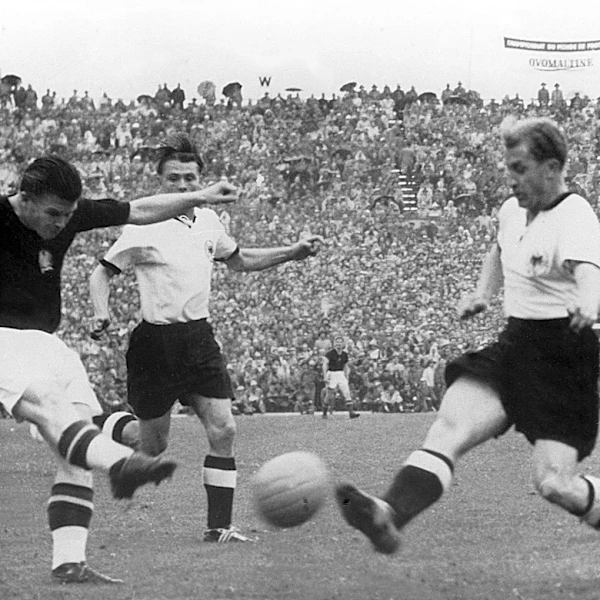
The 1966 World Cup final is etched into English history. In extra time, with the score tied 2-2 against West Germany, England’s Geoff Hurst fired a shot that hit the crossbar and bounced down. The referee consulted his linesman, who ruled the ball had crossed the goal line. The goal stood, England went on to win 4-2, and a debate was born. Did it *really* go in? German fans have cried foul for generations, while English fans have held it up as a moment of destiny.
This is a case not for VAR’s subjective eye, but for the cold, hard certainty of goal-line technology. Today, a series of high-speed cameras tracked by a central computer would have sent a signal to the referee’s watch within one second, confirming whether the entire ball had crossed the line. Modern analysis, including a 2016 Sky Sports study, has suggested the ball was not fully over the line. With modern tech, England’s most celebrated sporting moment might have been chalked off, potentially altering the course of soccer history. There would be no debate, just a definitive, and perhaps disappointing, digital verdict.
The Ghost Goal That Sparked a Revolution
If the 1966 goal was ambiguous, Frank Lampard’s “ghost goal” against Germany in the 2010 World Cup was anything but. With England trailing 2-1, Lampard chipped a beautiful shot that hit the crossbar, bounced a full yard over the line, and spun back out. Inexplicably, neither the referee nor the linesman saw it. Germany went on to win 4-1, and the global outcry was deafening. This wasn’t a split-second call; it was a glaring failure of human officiating on the world’s biggest stage.
This moment, more than any other, was the catalyst for change. The sheer absurdity of the missed call forced the hand of soccer’s conservative governing bodies. It was the final, undeniable piece of evidence that the game had become too fast and the stakes too high to rely solely on the human eye. Within a few years, FIFA approved and implemented goal-line technology for the 2014 World Cup. Lampard’s moment of heartbreak wasn't just a controversy; it was the controversy that directly paved the way for the technological systems we now take for granted.
The Modern Debate: Has Tech Solved Everything?
Technology has undoubtedly made soccer a fairer game. Obvious injustices like Maradona’s handball or Lampard’s ghost goal are largely things of the past. Yet, it hasn’t eliminated controversy; it has simply changed its nature. Instead of arguing about what the referee missed, we now argue about the technology itself. We debate millimeter-tight offside calls that question the “spirit” of the law. We scrutinize frame-by-frame replays of ambiguous handballs, where even with slow-motion, ten different people will have ten different opinions.
The old controversies were about human fallibility. They were dramatic, emotional, and created lasting narratives. The new controversies are about technological precision and interpretation. They feel more clinical, more frustrating, and often center on whether the technology is being applied correctly or is even good for the flow of the game. We've traded the fiery debate over a missed call for a sterile argument over a squiggly line drawn on a screen.