



The Million-Dollar Offer
In the early 1960s, Hollywood was gearing up for one of its most lavish productions: the film adaptation of the Broadway smash hit, My Fair Lady. The story of a pompous phonetics professor, Henry Higgins, who transforms a Cockney flower girl into a high-society
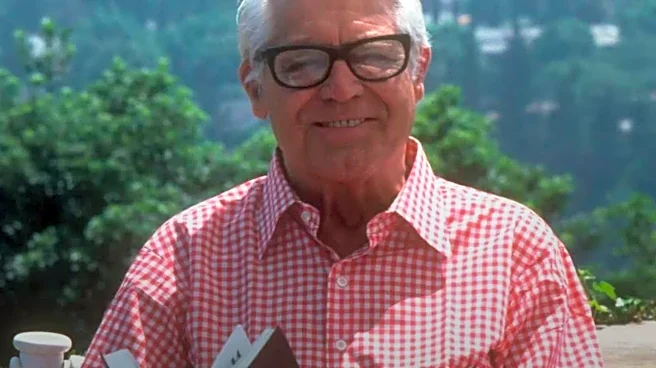
lady, was a guaranteed blockbuster. Studio head Jack Warner had his sights set on the biggest star in the world to play Higgins: Cary Grant. The offer was staggering for the era—a reported $1 million plus a percentage of the profits. On paper, it was a perfect fit. Grant’s unparalleled ability to blend biting wit with sophisticated charm made him the logical choice to lead a major musical opposite Audrey Hepburn.
A Surprising and Principled Refusal
But Grant did the unthinkable: he said no. His reason wasn't about money or scheduling. It was a matter of principle. The role of Henry Higgins had been originated and perfected on Broadway by British actor Rex Harrison. In Grant’s view, the part belonged to Harrison and no one else. He respected Harrison’s iconic stage performance so much that he refused to step in and take it. In an interview, Grant recalled telling Jack Warner, "Not only will I not do it, but if you don't use Rex, I won't even go to see it." This wasn't just a polite refusal; it was an ultimatum from a star who knew his own power. He believed Harrison had earned the right to immortalize his performance on screen.
An Unexpectedly Personal Connection
Beyond his professional respect for Harrison, Grant had a more personal, and somewhat ironic, reason for his hesitation. He felt he was fundamentally wrong for a character who spends an entire film teaching someone how to speak “properly.” Grant, the epitome of sophisticated elocution, was born Archibald Leach in Bristol, England, and his original accent was far from the polished cadence he was famous for. He reportedly told people that his natural way of speaking was much closer to Eliza Doolittle's Cockney accent than Professor Higgins's Received Pronunciation. The idea of him playing the expert who corrects a working-class accent struck him as fundamentally inauthentic.
Harrison’s Triumph and the Oscar Aftermath
Pressured by Grant's refusal, Jack Warner eventually relented and cast Rex Harrison, who reprised his Tony-winning role. The film was a monumental success, winning eight Academy Awards in 1965, including Best Picture. The ultimate vindication for Grant's decision came when Audrey Hepburn presented the Oscar for Best Actor to Rex Harrison for his unforgettable performance as Higgins. Harrison’s unique “talk-singing” style, which he had perfected on stage, became as iconic as the film itself. Grant’s instincts had been correct. The role was Harrison's, and the result was cinematic history. There was also a delicious irony in the public backlash Audrey Hepburn received for being cast as Eliza over Julie Andrews, who had starred opposite Harrison on Broadway; Grant had predicted that very backlash and wanted no part of it.
A Pattern of Passing on Iconic Roles
Turning down My Fair Lady wasn't an isolated incident for Grant. He showed a similar loyalty to stage actors when he also passed on the lead role of Harold Hill in The Music Man, insisting it belonged to Robert Preston, who had originated it on Broadway. He famously turned down the opportunity to be the first James Bond, a character Ian Fleming had partly based on Grant's performance in Notorious, because he didn't want to commit to a series. He also passed on roles in A Star Is Born and Sabrina. For Grant, his career wasn't about collecting trophies or paychecks. It was about crafting a specific legacy and, in some cases, upholding a code of professional honor that was rare even then.