



A Character Made of Chaos
Animating a character is one thing. Animating a character that is fire, smoke, and molten rock is another beast entirely. For Disney's animators, Te Kā wasn't just a creature to be designed; she was a collection of chaotic, natural elements that had to be brought
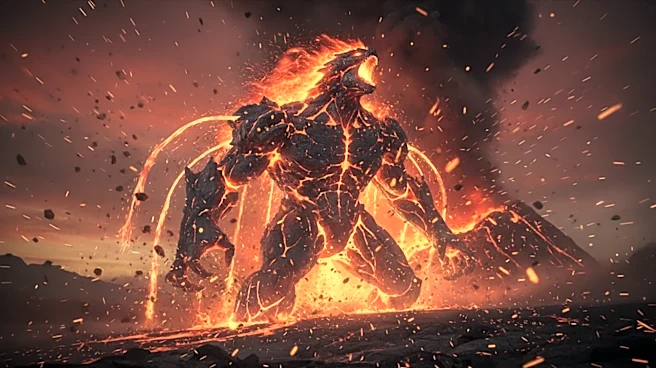
under control to form a single, coherent being. Fire and smoke are notoriously difficult to simulate realistically in CGI. The challenge multiplies when those elements need to act, move with intention, and express emotion. Every movement Te Kā made required layers upon layers of heavily art-directed simulations. The team couldn't just press a "lava monster" button; they had to build a system that allowed them to wrangle pyroclastic plumes and flowing magma into a believable, 300-foot-tall performance that served the story.
Giving a Volcano a Personality
How do you make a volcano angry? Te Kā has no traditional face, no eyebrows to furrow or lips to snarl. Her emotional range is essentially, as the filmmakers noted, somewhere between rage and extreme rage. The animators had to get creative, using her entire body as an instrument of her fury. They turned to what they called “elemental language.” The intensity of the flames, the thickness of the billowing smoke, the violent cracks forming on her rocky exterior, and even the lightning that flashed around her became proxies for facial expressions. Animators would first block out the performance on a simple, faceless mannequin-like rig, focusing on her core movements and rage-fueled gestures. Only then would the effects department layer on the fire, lava, and smoke simulations that brought her terrifying personality to life.
A New Workflow for a New Monster
The sheer complexity of Te Kā, who appeared in over 100 shots, meant the traditional, handcrafted effects pipeline wasn't going to work. The rendering times would have been astronomical, and the process too slow for creative iteration. In response, Disney's engineers developed a new workflow called "Foundation Effects" or FFX. This system allowed artists to build a library of pre-designed, reusable effects assets—think individual lava drips, puffs of smoke, and patches of fire. Animators and layout artists could then place these assets onto the character rig to quickly block in a scene and get a real-time sense of the final look. This hybrid approach—combining broad, foundational assets with hero simulations for close-ups—was the key to delivering such a complex character on schedule and gave directors early opportunities for feedback.
The Narrative Transformation
Perhaps the greatest challenge was that Te Kā's design had to serve a massive story beat: her transformation back into the life-goddess Te Fiti. She couldn't just be a monster; she had to be a corrupted version of a benevolent deity. This duality is subtly embedded in her design. Her form, while monstrous, holds the same basic silhouette as Te Fiti. The spiral on her chest, where her heart should be, is a direct visual cue to her true identity. This meant the VFX team had to ensure that the chaotic, fiery design of Te Kā could believably cool and crumble away to reveal the serene, living island underneath. This story requirement elevated the design from a simple monster to a complex, dual-identity puzzle that had to be solved both artistically and technically, making her the ultimate stress test for a studio that specializes in bringing imagination to life.