
A Legacy of Legendary Villains
For thirty years, Andreas Deja was one of the pillars of Walt Disney Animation. After arriving from Germany in 1980, he quickly became a defining force in the Disney Renaissance, the studio's celebrated
return to animated glory. If you’ve ever been intimidated by Scar in 'The Lion King', charmed by the brutish Gaston in 'Beauty and the Beast', or mesmerized by the villainous Jafar in 'Aladdin', you’ve experienced Deja’s mastery firsthand. He was the supervising animator for these characters, a role he describes as being an "actor with a pencil," responsible for breathing life and personality into every frame. His work also included heroes like King Triton and Hercules, and even the quirky Lilo from 'Lilo & Stitch', cementing his status as a versatile and indispensable talent.
The Dream of 'Mushka'
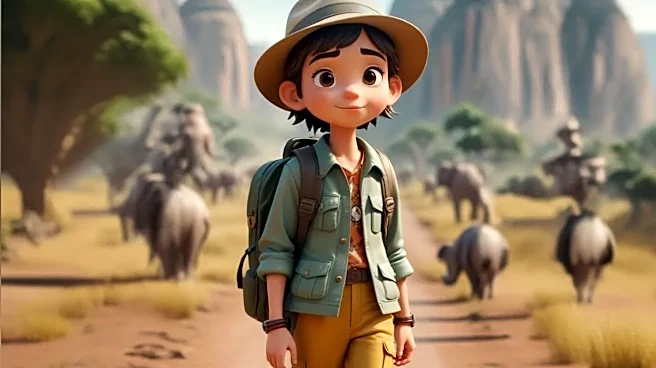
After decades of animating other people's stories, Deja decided to tell one of his own. He left Disney in 2011 to pursue independent projects. The result was 'Mushka,' a 28-minute hand-drawn animated short film that was nearly a decade in the making. The story, set in the 1970s Soviet Union, follows a young Ukrainian girl named Sarah who raises an orphaned Siberian tiger cub. Inspired by a lifelong fascination with tigers and a desire to tell a story about love and sacrifice, the project became Deja's primary focus. It was a deeply personal film, dedicated to Eric Larson, one of Disney's original 'Nine Old Men' and the mentor who first hired Deja.
Trading a Studio for Artistic Control
So why did it take so long? The simple answer is that Deja traded the colossal machine of Disney for the painstaking freedom of independent filmmaking. At Disney, hundreds of specialized artists contribute to a single film. For 'Mushka,' Deja was the director, producer, and lead animator, overseeing every detail. He chose this path because the studio had shifted its focus to computer animation, while Deja’s passion remained with hand-drawn art. As he put it, drawing was in his DNA. This meant assembling a small, rotating team of freelance artists who would work on the film between their other jobs. Without a studio's rigid deadlines, the mantra became, "when it was done, it was done."
The Artistry of Patience
The long production was also a direct result of the chosen art style. Deja wanted 'Mushka' to have the visual texture of a colored pencil sketchbook, inspired by the classic look of '101 Dalmatians'. This rough, expressive style is incredibly labor-intensive and requires immense care to avoid flickering when animated. It was a complete rejection of the slick, computer-generated gloss that dominates modern animation. The project wasn't funded by a major studio, which meant Deja had the creative freedom to see his specific vision through, no matter how long it took. The process was an adventure of its own, involving a small global team and even a song from the late, legendary Disney songwriter Richard Sherman.
More Than Just a Movie
Ultimately, the decade-long journey to create 'Mushka' wasn't a bug; it was the feature. The project represents a stand for artistic integrity and the enduring power of hand-drawn animation. It allowed Deja to grow from an animator into a full-fledged director, involved in everything from storyboarding to the musical score. For an artist who spent a career mastering the language of Disney, 'Mushka' was his chance to speak in his own voice. It was a tribute to his mentors, a passion project fueled by his love for the craft, and a statement that, in an industry obsessed with speed and technology, some things are still worth the wait.