




From Unworthy Prince to Tragic King
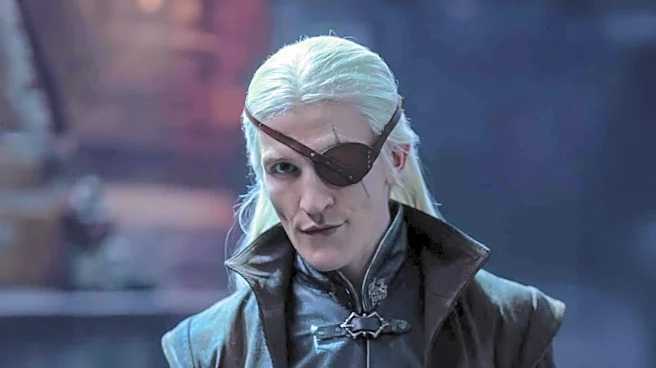
Let’s be honest: for most of his screen time, Aegon Targaryen was not a sympathetic figure. He was the embodiment of unearned privilege, a drunken lout more interested in the brothels of Flea Bottom than the burdens of the Iron Throne. He was a narrative
obstacle, the unworthy son foisted onto the throne by his ambitious grandfather, Otto Hightower. Viewers were conditioned to see him as a spoiled, irresponsible prince, a pale imitation of a king when compared to his resolute half-sister, Rhaenyra. Tom Glynn-Carney initially played him with a swaggering insecurity, a young man drowning in vices to escape a destiny he never wanted. His coronation wasn't a moment of triumph, but one of terror, solidifying his role as a puppet king.
The Fires of Rook's Rest Changed Everything
The turning point for Aegon, and for the audience's perception of him, was the disastrous Battle of Rook's Rest. Lured into a trap, he wasn't a glorious warrior king; he was a terrified young man who was horrifically burned and crippled. The show didn’t shy away from the brutal consequences. We saw him broken, his armor being cut from his charred body, his reign effectively paused. Stripped of his youthful arrogance and physical prowess, a different Aegon began to emerge. Glynn-Carney’s performance shifted from portraying a petulant prince to a man in constant, agonizing pain. This suffering began to humanize him, making him more than just a symbol of the Greens' usurpation. It transformed him into a tragic figure, a victim of the very war he was meant to lead.
A Finale Fueled by Pain and Revenge
By the Season 2 finale, Aegon is a shell of his former self, physically and emotionally. His time is spent in a milk-of-the-poppy haze, his power wielded by others. But it's in this state of ultimate vulnerability that his character finds a new, chilling strength. Glynn-Carney conveys a profound shift in Aegon’s demeanor; the fear has curdled into a cold, hard resolve. When Larys Strong convinces him to flee King's Landing, it isn't an act of cowardice but one of survivalist pragmatism. He has been betrayed, broken, and even his own mother, Alicent, was willing to sacrifice him to end the war. The finale leaves him not as a king on a throne, but as a fugitive with nothing left to lose and a burning desire for vengeance. This isn't the reluctant boy from Season 1; this is a hardened survivor.
Glynn-Carney's Masterclass in Complexity
The success of this arc rests squarely on the shoulders of Tom Glynn-Carney. He has deliberately avoided playing Aegon as a one-dimensional villain in the vein of Joffrey Baratheon. Instead, he layers the character with flashes of humor, deep-seated insecurity stemming from parental neglect, and a tragic desire to be loved. Even George R.R. Martin has praised the performance for bringing out the character's humanity, pain, and fear. In the finale, his quiet, focused anger is more menacing than any of his previous tantrums. The actor himself has noted that Aegon ends the season more focused and driven than ever, fueled by a desire for revenge. Through subtle choices—a cold stare, a pained grimace, a moment of bleak optimism—Glynn-Carney makes Aegon's internal journey the most compelling story on screen.