






Beyond the Famous Four Cs
For decades, the diamond industry has educated consumers on the 4Cs, and for good reason. These metrics provide a crucial baseline for quality. Carat defines weight, Clarity measures internal flaws, and Color grades the stone’s nearness to colorless.
But it's the fourth C, Cut, that has the most significant impact on a diamond's sparkle. Yet, even the 'Cut' grade itself has a hidden layer. A diamond can receive a top grade of 'Excellent' from an institution like the Gemological Institute of America (GIA) while still not exhibiting the pinnacle of craftsmanship. That's because the overall Cut grade is an umbrella term, encompassing components that deserve their own spotlight. The real magic isn't just in the proportions but in the meticulous execution of the diamond’s finish.
The Artist’s Signature: Symmetry and Polish
The true signature of a master diamond cutter is found in two often-overlooked attributes listed on a GIA report: Polish and Symmetry. These two factors determine the final finish of the diamond and reveal the care taken during its creation. Polish refers to the smoothness of each facet. A poorly polished diamond will have microscopic scratches or marks that, while perhaps invisible to the naked eye, hinder light from entering and exiting cleanly, resulting in a slightly hazy or dull appearance. Symmetry refers to the precision of the facet arrangement. Think of it as the diamond's internal architecture. Are the facets perfectly aligned and mirrored? Do they meet at crisp, clean points? When symmetry is off, even slightly, light that enters the diamond gets misdirected and leaks out the sides or bottom instead of returning to your eye as brilliant sparkle.
Seeing the Secret: The 'Hearts and Arrows' Effect
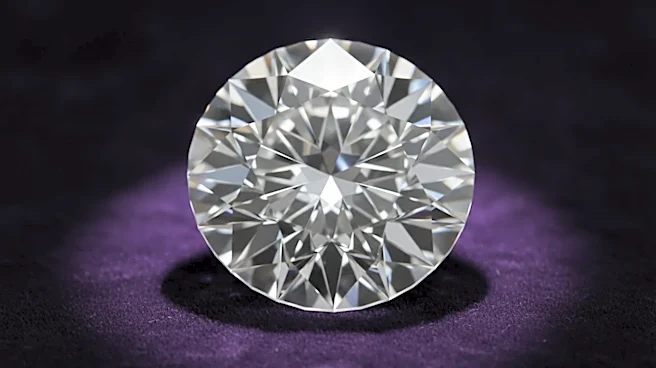
So how can you, a non-expert, spot this superior craftsmanship? In round brilliant diamonds, the ultimate proof of exceptional symmetry is a phenomenon known as “Hearts and Arrows.” When a diamond is cut with near-perfect optical symmetry, a distinct pattern emerges when viewed through a special scope. From the top (the crown), you can see eight uniform arrows. When you flip the diamond over and look through the bottom (the pavilion), you see eight perfectly formed hearts. This isn't a brand or a special type of diamond; it’s a direct visual confirmation that the cutter took the time to align all 57 or 58 facets with painstaking precision. It's an undeniable hallmark of a 'super ideal' cut, a stone that goes beyond the standard 'Excellent' grade into the realm of true artistry. Fewer than 1% of the world's diamonds are cut to this exacting standard.
Why This Hidden Detail Is Worth Seeking
Focusing on excellent Polish and Symmetry does more than just earn bragging rights. It translates directly into the visual performance—and beauty—of the stone. A diamond with these superior qualities will appear more brilliant, fiery, and alive than one with just a 'Good' or 'Very Good' rating in these categories, even if their other stats are identical. It's what separates a diamond that just checks the boxes from one that seems to generate its own light. The precision of the cut allows the stone to handle light in the most effective way possible, creating maximum sparkle and often making the diamond appear larger than its carat weight suggests. This level of craftsmanship ensures that the diamond is reaching its absolute full potential. It's the difference between a mass-produced item and a masterpiece.