



The Monotony of the Color Story
For decades, red carpet analysis has been stuck in a comfortable but limiting loop. We celebrate the bold scarlet, the classic black, the surprising canary yellow. Fashion commentators praise color risks, but the conversation often stops there, reducing
a complex garment to a single Pantone swatch. This approach misses the artistry of fashion, the element that separates a pretty dress from a breathtaking moment. It's a two-dimensional critique in a three-dimensional world. While color is undeniably a powerful tool, its singular focus can make red carpet fashion feel repetitive. It flattens the discourse, ignoring the crucial elements of structure, material, and surface detail that truly bring a look to life.
Erivo's Masterclass in Materiality
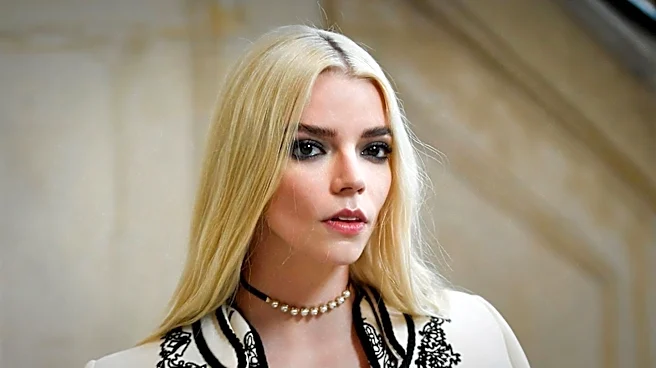
Enter Cynthia Erivo, an artist whose style choices are as powerful and nuanced as her performances. At the recent Toronto International Film Festival, she offered a perfect case study. For the premiere of her new film, Erivo wore a Dior gown that was less about its black-and-white color scheme and more about its dramatic construction. The dress featured thick tassels of ivory floral fabric that cascaded over a base of glistening black embroidery, creating a dynamic interplay of light and shadow. This wasn't just a dress; it was a piece of sculpture. In a sea of simple, colorful gowns, Erivo’s choice was a declaration. It demanded a closer look, rewarding the viewer with intricate details—the sheen of the embroidery against the matte, sculptural quality of the floral tassels. This is a consistent theme in her style; she and her stylist, Jason Bolden, often select pieces with significant volume, structure, or surface embellishment, from complex ruffles to shiny vinyl. She understands that texture is what gives a garment its mood and its life.
Texture as a Form of Storytelling
For an actress known for her transformative roles, from Celie in 'The Color Purple' to Elphaba in 'Wicked,' this focus on texture feels like an extension of her craft. Texture is a way to convey emotion and narrative without saying a word. A soft, feathery fabric can suggest vulnerability, while sharp, architectural pleats can project strength and confidence. Erivo's fashion choices are never arbitrary; they are part of her performance. For her 'Wicked' press tours, she has famously leaned into her character with gothic glamour and shades of emerald, but even there, the choices were texturally complex, involving everything from shimmering sequins to dramatic tulle and slick vinyl. She has described her own style as 'Afrofuturistic' and spoken about wanting to use fashion to create a moment. By prioritizing materials that are visually and tactilely engaging—be it heavy beading, intricate weaving, or dramatic fringe—she tells a story that goes far beyond the color wheel.
Redefining the Red Carpet 'Rules'
Erivo’s approach challenges us to be better, more observant fashion consumers. She reminds us that the most impactful fashion moments are rarely the simplest. They are the ones that manipulate fabric and form to create a new silhouette, to play with our perception, and to evoke a feeling. Her style forces us to move beyond the easy headline—'Cynthia in yellow'—and into a more sophisticated analysis of why a look works. It’s about how the stiff fabric of a skirt creates a powerful shape, how layers of tulle add ethereal volume, or how dense beading catches the light with every step. In doing so, she’s not just showcasing beautiful clothes; she’s providing a much-needed education in fashion literacy. She proves that while anyone can wear a color, it takes a true fashion visionary to command a texture.