



More Than Just a Movie Screening
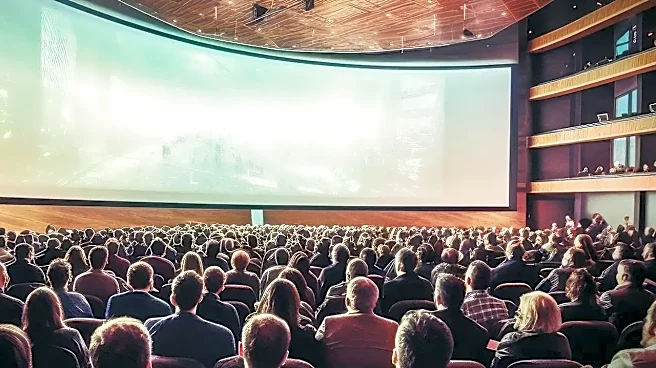
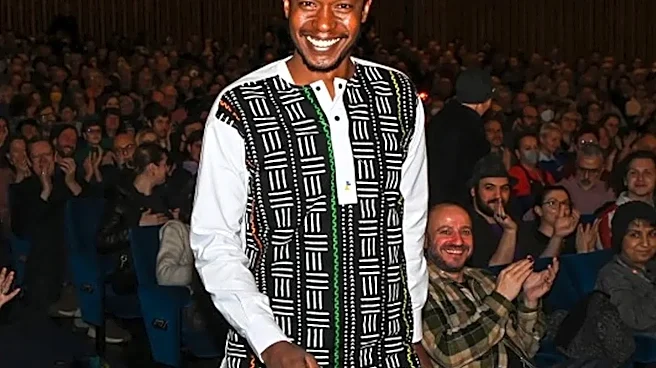
First, let's reframe the festival premiere. While it’s a huge moment of celebration, an industry screening at a top-tier festival is less of a party and more of a high-stakes business meeting. The audience is a curated mix of critics, distributors, sales
agents, and seasoned festival-goers whose reactions are monitored with forensic precision. For filmmakers, this isn't just about sharing their art; it's about selling it. A roaring ovation can spark a bidding war between distributors. A smattering of polite claps or, even worse, a stream of mid-movie walkouts, can signal serious trouble. This screening is the film's first real-world test, a launchpad where its future commercial life—whether it gets a wide release, goes straight to streaming, or vanishes entirely—is often decided.
The Buzz and The Notes
Immediately after the credits roll, the feedback loop begins. It comes in two forms: public and private. The public feedback is the 'buzz'—the first wave of reviews from critics and the chatter on social media from attendees. This narrative forms instantly and can be incredibly powerful. A surprise 'masterpiece' creates demand, while a 'beautiful mess' sets a challenge for the marketing team. Privately, the feedback is more direct. Potential distributors will give candid 'notes' to the producers. These aren't gentle suggestions; they are often blunt, business-driven assessments of what needs to change for them to invest millions in acquiring and marketing the film. They might love the performances but hate the downer ending, or feel the two-and-a-half-hour runtime will kill its box office potential.
From Festival Cut to Final Cut
Armed with this feedback, filmmakers often head back to the editing bay. The version of a film screened at a festival is frequently called a 'festival cut' for a reason; it may not be the final version. It's not uncommon for films to be tightened up, sometimes drastically, between their festival debut and their theatrical run. Scenes that confused or bored the festival audience might be trimmed or removed entirely to improve pacing. A famous example is 'Apocalypse Now', which Francis Ford Coppola continued to edit after its Cannes premiere. Sometimes the changes are more significant, like reshooting an ending that tested poorly or adding clarifying voice-over. While 'Harvey Scissorhands' (a nickname for Harvey Weinstein's aggressive re-editing) represents the extreme end, nearly all films undergo some level of polish based on their first public exposure.
Crafting the Public Narrative
The festival experience doesn't just change the film; it defines how it's sold to the public. The marketing campaign is built on the foundation of the festival reception. The quotes from glowing reviews become the centerpiece of the poster. A surprising standing ovation becomes the heart of the trailer. An Electronic Press Kit (EPK), which includes stills, clips, and a director's statement, is refined and sent out to a wider media circle. If a film was divisive, the marketing team might pivot, positioning it as a daring 'love-it-or-hate-it' experience for a niche audience. If it was a crowd-pleaser, the campaign will emphasize its universal appeal. Every choice, from the trailer's music to the tagline on the poster, is informed by those initial reactions in the festival theater.
When the Film Finally Meets the World
The final step is the public release, where the film's fate is sealed not by a few hundred industry insiders, but by millions of ticket-buyers. The reception here can be wildly different from the festival bubble. A critic-proof blockbuster might get tepid reviews at a festival but soar at the box office. Conversely, a subtle, artistic film championed by festival critics might struggle to find a mainstream audience. This is where the wider world gets to vote with their wallets and their own online reviews. The controlled environment of the festival premiere gives way to the chaotic, unpredictable, and ultimately democratic court of public opinion. Only then, months or even a year after that first glamorous screening, is the film's journey truly complete.