
The Setting for a Miracle
The clock was bleeding away on a cold December day in 1975. The Dallas Cowboys were on the road in Minnesota, trailing the Vikings 14-10 in an NFC Divisional Playoff game. With just 32 seconds left, the situation
was bleak. Dallas had the ball at midfield, but the Vikings' famed "Purple People Eaters" defense had smothered them all afternoon. The home crowd was roaring, sensing a victory that would send their team one step closer to the Super Bowl. For the Cowboys, hope was dwindling to its final embers. Coach Tom Landry later admitted their only option was to throw the ball and hope for a miracle.
A Throw and a Prayer
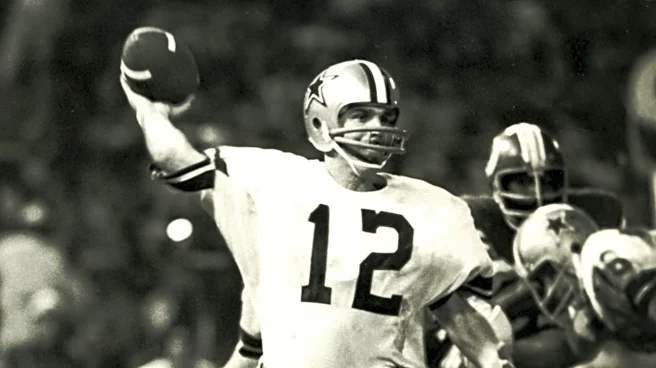
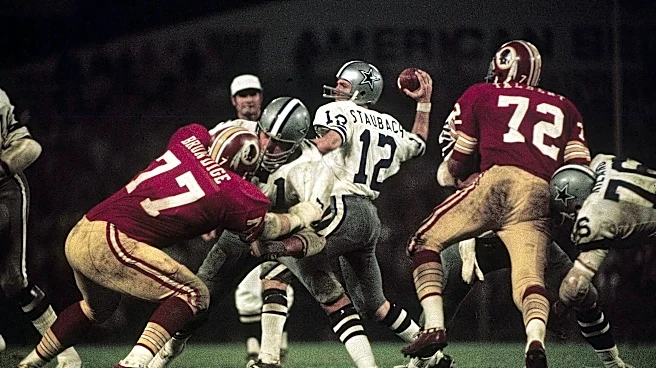
In the huddle stood Cowboys quarterback Roger Staubach. A Heisman Trophy winner, a Vietnam veteran, and a man nicknamed "Captain America," Staubach was known for his poise under pressure. But this was different. After a crucial fourth-down conversion kept the drive alive, Staubach had the ball at the 50-yard line with just seconds to go. He took the snap, scrambled away from the rush, and did the only thing he could: he launched the ball as hard as he could toward the end zone where his receiver, Drew Pearson, was sprinting. As the ball hung in the frigid Minnesota air, it was more than just a football; it was an object of pure hope.
The Controversial Catch
What happened next is etched into NFL lore. Pearson, fighting for position with Vikings defensive back Nate Wright, appeared to slow down as the underthrown ball descended. Wright stumbled and fell. Pearson trapped the ball against his right hip at the five-yard line and trotted into the end zone for the game-winning touchdown. Vikings players and fans were instantly furious, screaming for an offensive pass interference penalty on Pearson for pushing off. To this day, Minnesota fans argue that the play should never have counted. Pearson has always maintained it was just a battle for the ball. But the officials made no call, and the score stood. Cowboys 17, Vikings 14.
The Birth of a Legend
The real story, the one that gives the play its name, happened afterward in the locker room. Surrounded by reporters asking what he was thinking during that final, desperate moment, Staubach, a devout Catholic, gave an honest, unscripted answer. "I closed my eyes and said a Hail Mary," he told the press. It wasn't a pre-planned soundbite. It was a simple statement of personal faith from a man who grew up attending daily Mass. He wasn't trying to coin a phrase; he was just explaining that he had thrown the ball and prayed. He could have mentioned any prayer, he later joked, and we might be talking about the "Our Father Pass."
From Personal Plea to Football Lexicon
While the term had been used in niche circles at Catholic universities like Notre Dame for decades, Staubach's comment launched it into the national consciousness. An Associated Press reporter picked up the quote, and suddenly, every desperation heave in football had a name. It stuck because it perfectly captured the essence of the play: a low-probability act that relies as much on faith and luck as it does on skill. The phrase resonated far beyond the gridiron, becoming a universal term for any last-ditch effort. But its roots trace back to one quarterback, one play, and one quiet, personal moment of prayer that accidentally became public.