



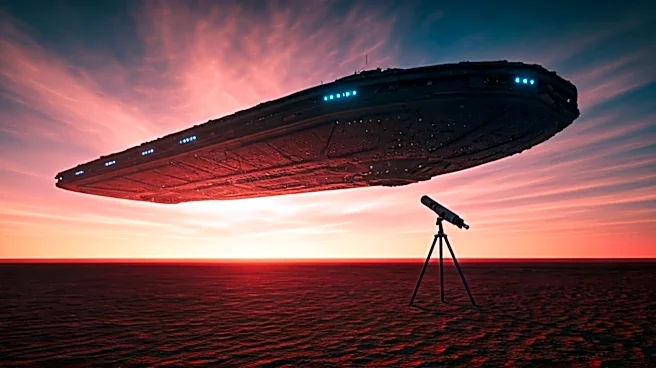
The Architect of Awe
For a generation, Steven Spielberg was the official ambassador for extraterrestrial contact. In 1977, *Close Encounters of the Third Kind* transformed the flying saucer from a cheap B-movie prop into a vessel of sublime, symphonic mystery. His aliens
weren’t invaders; they were celestial composers offering humanity a five-note invitation to the cosmos. The film’s protagonist, Roy Neary, doesn’t grab a shotgun—he sculpts mashed potatoes, obsessed not by fear, but by an unshakeable sense of awe. Five years later, *E.T. the Extra-Terrestrial* doubled down on this vision, shrinking the encounter to a child’s-eye view. The alien wasn’t just non-threatening; it was a friend, a lost, doe-eyed creature who needed our help. These two films didn’t just make billions; they cemented a powerful cultural idea: the universe is not empty, and what’s out there might just be beautiful.
A World Without Wonder
The problem for Spielberg—and for anyone trying to tell a UFO story in the 21st century—is that we don't live in that world anymore. The cultural soil that nourished *Close Encounters* has been salted with cynicism, paranoia, and a flood of information. The hopeful mystery of the 1970s has been replaced by something far more complicated. The internet, once a utopian dream, became a hothouse for elaborate conspiracies. Shows like *The X-Files* shifted the narrative from cosmic wonder to government cover-up, whispering, “Trust no one.” The friendly alien started to feel hopelessly naive. More recently, the conversation has moved from the fringes to the floor of Congress. When government officials and former intelligence officers testify about “Unidentified Aerial Phenomena” (UAPs), they aren't speaking in musical tones. They’re speaking the language of national security, potential technological inferiority, and non-human biologics. The UFO is no longer a symbol of spiritual connection; it’s a potential threat vector.
The Genre Moved On
While Spielberg was off making historical dramas and adventure blockbusters, the alien genre didn’t wait for him. It mutated, reflecting our changing anxieties. Denis Villeneuve’s *Arrival* (2016) kept the wonder but filtered it through linguistics and theoretical physics, making contact an intellectual puzzle box rather than a heartfelt lightshow. Jordan Peele’s *Nope* (2022) flipped the script entirely, presenting the UFO not as a ship but as a predatory, territorial animal—a terrifying force of nature to be survived, not understood. These films resonate because they speak to a modern audience. *Arrival* engages our desire to solve complex problems, while *Nope* taps into our anxieties about surveillance, spectacle, and being consumed by something we can’t control. The benevolent, wide-eyed alien of Spielberg’s heyday feels like a relic from a more innocent time.
Spielberg's Final Frontier?
Now, reports confirm Spielberg is writing a new, original film about UFOs. The project, which he has teased himself, represents a fascinating, full-circle challenge. How does the man who taught us to look up in awe create a UFO story for an audience that looks down at their phones, scrolling through grainy Pentagon footage and congressional testimony? Does he try to reclaim his signature sense of wonder, insisting on optimism in a cynical age? Or does he adapt, acknowledging that the mystery he once cultivated has been co-opted by forces of paranoia and politics? His last brush with the genre, 2005’s *War of the Worlds*, was a dark, post-9/11 tale of survival, not connection. It proved he can do terror. The question is whether he still believes in magic, and if he can convince us to believe in it, too.