





It’s a classic movie moment, especially in horror and thrillers: an actor shares the screen with… themselves. Whether they’re playing twins or a sinister doppelgänger, the effect is always a bit of spooky fun. But how exactly do they do it?
The Old-School Split-Screen
The original
trick is one of the simplest. Filmmakers would lock the camera in a fixed position and film the actor performing on one side of the frame. Then, they’d change their costume or character and film the other half of the scene, performing on the opposite side. In post-production, the two takes are combined by literally splitting the screen down the middle, creating the illusion of two characters in one shot. The key was ensuring the dividing line was invisible. Early examples of this date back to the beginning of cinema and were famously used in TV shows like The Patty Duke Show to create identical cousins. The major limitation, however, was that the camera couldn't move, and the characters couldn't cross the invisible line.
Hiring a Body Double
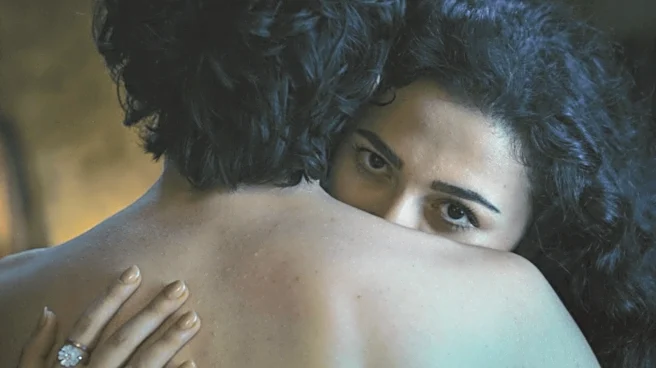
A more straightforward and practical approach involves simply using a body double. For any over-the-shoulder shots, a stand-in with a similar build and hairstyle can play the opposite character with their back to the camera. This allows for more natural interaction and dialogue between the two “versions” of the actor. The audience's brain fills in the gaps, assuming they're seeing the main actor's face when the camera angle switches. It's a low-tech but highly effective method still used today for its simplicity and efficiency, especially in scenes that don't require complex physical interaction. This trick saves a ton of time on set compared to more technical solutions.
Motion Control: The Game Changer
The real revolution came with motion control cameras. These are robotic camera systems that can perform a pre-programmed camera move with perfect precision, over and over again. This technology finally freed the camera from its static position. A director could now film a sweeping, complex camera movement with the actor playing one character. Then, after a costume change, they could run the exact same camera move again while the actor plays the second character. Because the camera’s path is identical in both takes, the two shots can be seamlessly composited together in post-production. This allows the two characters to appear to move around a dynamic scene together, a massive leap forward from the static split-screen.
Digital Compositing and Green Screens
Today, the most versatile tool is digital compositing, often paired with green (or blue) screens. An actor can be filmed playing one character, and then filmed again against a green screen as the second character. Post-production artists then digitally cut the actor out of the green screen footage and layer them into the original shot. This method allows for almost unlimited interaction. The two versions of the actor can cross paths, touch, and even fight each other because artists have pixel-perfect control over how the two performances are blended. Techniques like digital matting and rotoscoping (tracing an object frame-by-frame) are used to make the combination look absolutely seamless, even with handheld cameras and chaotic action scenes.
The Most Important Trick: The Performance
Beyond all the technology, the success of the illusion ultimately rests on the actor's shoulders. They have to perform entire scenes while reacting to a character who isn't there. Often, they act opposite a tennis ball on a stand to get the eyeline right or listen to their own pre-recorded dialogue through an earpiece. It requires immense concentration and imagination to create a believable relationship between two characters when you're performing in a void. An actor must essentially create both sides of the chemistry. Without a convincing performance that sells the idea of two distinct individuals, even the most advanced VFX will fail to be convincing.