





The Moroccan Blueprint
Remember Morocco in 2022? Of course you do. Their run to the World Cup semifinals was the stuff of legend—a thrilling, passionate, and tactically brilliant campaign that captivated the globe. They weren’t just a plucky underdog; they were a disciplined,
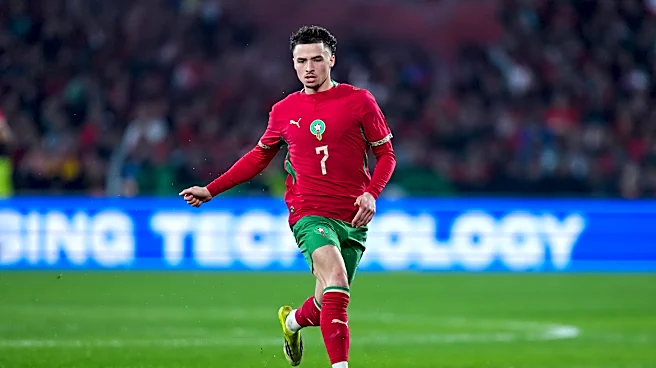
organized unit that out-thought and out-fought European powerhouses like Spain and Portugal. For decades, the narrative around African teams was one of raw talent and potential, often undone by disorganization or naivety. Morocco shattered that stereotype. They provided the blueprint: a combination of elite, European-based talent (Achraf Hakimi, Sofyan Amrabat), a world-class manager, and unwavering tactical identity. For the casual American fan, this was more than a fluke. It was a warning shot, a proof-of-concept for what is now possible. It was the trailer for the movie we should all be watching in 2026.
The Talent Pipeline Is Overflowing
Morocco’s success wasn't an isolated incident. It was the most visible sign of a trend that has been building for years: African players aren’t just participating in Europe’s top leagues; they are dominating them. This isn't the 1990s, where one or two stars carried the hopes of a nation. This is an entire generation of elite, battle-hardened talent. Nigeria’s Victor Osimhen is one of the most feared strikers on the planet, leading Napoli to a historic Italian league title. Ghana’s Mohammed Kudus is a dynamic, unplayable force in the English Premier League for West Ham. Morocco’s Hakimi is a fixture at powerhouse Paris Saint-Germain. Senegal has a core of players from top clubs who have already won the Africa Cup of Nations. The list goes on. The key difference now is depth. These aren't teams built around a single superstar; they are increasingly 23-man squads where the 15th man plays for a top-flight club in France, Germany, or England. That baseline level of quality, forged in the crucible of the Champions League, is the ingredient that has long been missing.
The Rules of the Game Have Changed
This is the part even many seasoned fans might miss, and it’s arguably the most important factor. The 2026 World Cup is expanding from 32 to 48 teams. For the African confederation (CAF), this is a game-changer. The number of guaranteed spots for African nations will nearly double, jumping from five to nine, with a tenth team able to qualify through an inter-confederation playoff. Why is this so massive? The old five-slot system was brutally punishing. Powerhouse teams like Nigeria, Egypt, Ivory Coast, and Senegal would often have to face each other in do-or-die qualifiers, meaning giants were guaranteed to miss out. This new format provides breathing room. It means Africa won’t just be sending *more* teams; it will be sending its *best* teams, consistently. The days of a team like Nigeria—with its population of 220 million and insane soccer passion—missing the tournament due to a bad draw could be over. This structural change raises the floor and the ceiling for the entire continent.
So, Who Carries the Torch?
While the storyline is the rise of the continent, the narrative will crystallize around a few key contenders. Keep an eye on Nigeria. Often called the “Sleeping Giant” of world football, their attacking talent with players like Osimhen and Victor Boniface is staggering. If they can achieve the tactical coherence Morocco displayed, they have the firepower to beat anyone. Senegal, the 2021 African champions, remain a benchmark for organization and professionalism. They know how to win, and their core is experienced. And, of course, there is Morocco itself. The challenge will be to prove that 2022 was not a one-off but the beginning of a new era. With home-continent-like support likely to swell in cities across the U.S. and Canada, these teams won’t just be participants; they’ll be formidable forces with passionate backing.