





A Spray of Italian Sunshine
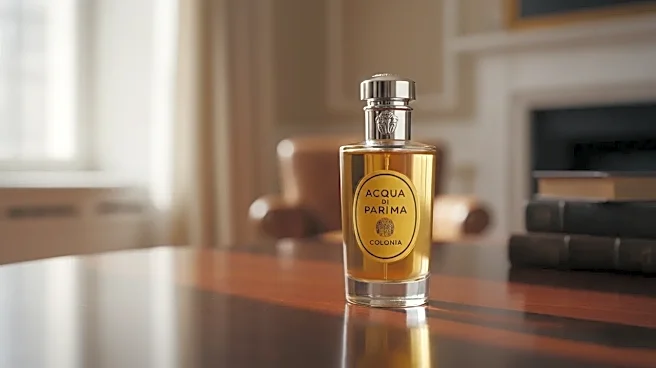
Before we talk history, let's talk about the scent itself. To smell Colonia is to understand its endurance. It opens with a bright, joyful burst of Sicilian citrus—lemon, sweet orange, and bergamot—that feels like uncorking a bottle of sunshine. This
isn’t a fleeting, sugary citrus, but a refined, photorealistic one. Soon after, an aromatic heart of lavender, rosemary, and verbena emerges, lending a clean, almost 'barbershop' elegance that prevents the opening from being merely fresh. The dry down settles into a subtle, warm base of vetiver and sandalwood. The effect is sophisticated yet effortless; it doesn't announce your presence but rather elevates it. It’s the scent of a crisp linen shirt on a warm day, a symbol of understated good taste.
The Tailor's Secret Weapon
Colonia was created in a small workshop in Parma, Italy, in 1916 by Baron Carlo Magnani. At the time, men's fragrances were predominantly heavy, dense, and often of German origin. Magnani wanted something different for himself: a scent that was light, fresh, and distinctly Italian. Initially, Colonia wasn’t for sale to the public. It was a personal creation, a secret passed among a small circle. Its first commercial use was by local tailors, who would spritz it onto bespoke suits as a final, luxurious touch before delivering them to discerning clients. This method of discovery—intimate, exclusive, and tied to craftsmanship—defined Colonia's identity from the very beginning. It wasn't a product to be mass-marketed; it was a detail to be discovered.
The Stamp of Hollywood's Golden Age
By the 1930s and into the 1950s, Colonia had found its way to Hollywood. As American film stars traveled to Italy, they discovered this scent that was so different from the dramatic perfumes of the era. Icons of effortless style like Cary Grant, David Niven, and Audrey Hepburn became devotees. They weren't paid ambassadors; they were genuine fans who appreciated its quiet elegance. This celebrity endorsement wasn't the result of a marketing campaign but of authentic admiration, cementing Colonia's status as the scent of the sophisticated elite. While other fragrances defined an era, Colonia became a signature for individuals who transcended trends.
Against the Tides of Scent
Think of the fragrance trends Colonia has weathered. It survived the heavy, earthy patchouli and musks of the 1970s and the loud, powerful spicy orientals like Opium that dominated the 1980s. It stood in quiet contrast to the minimalist, unisex aquatics of the 1990s and the wave of sugary, gourmand scents of the 2000s that aimed to smell like candy and vanilla. While each of these trends captured a moment, Colonia’s classic citrus-aromatic structure needed no update. Its refusal to conform was its strength. The brand did face a quiet period in the '70s and '80s but was revived in the 1990s by Italian entrepreneurs who understood its value as a cultural symbol, relaunching it with its original formula intact.
The Modern Appeal of Timelessness
Today, in a saturated market, Colonia's appeal is stronger than ever. It's considered a unisex masterpiece, worn by men and women who appreciate its heritage and versatility. It represents a move away from loud, synthetic 'statement' scents towards something more personal and authentic. Wearing Colonia in the 21st century is a nod to a different kind of luxury—one based on quality and history, not novelty. It’s a fragrance that never feels dated because it was never truly “in fashion” to begin with. It simply is, and always has been, the epitome of Italian elegance in a bottle.