
Make the Body a Megaphone
When the face can’t express, the body has to shout. Actors trained in mask work learn to translate emotions into pure physicality. A slump of the shoulders conveys defeat, a rigid posture signals threat,
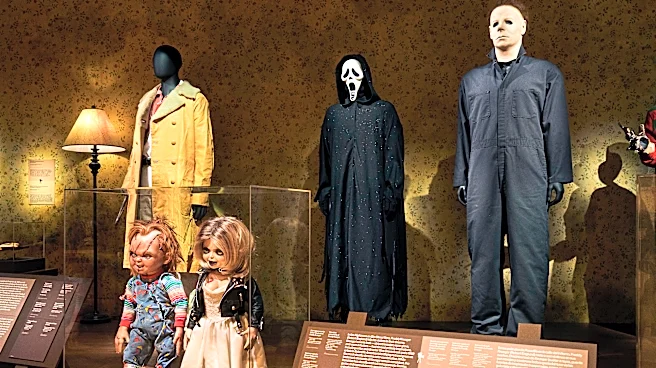
and outstretched arms can read as a desperate plea or a terrifying embrace. The key is to exaggerate gestures that would normally be accompanied by a facial expression. Instead of a subtle frown, a masked character might clench their fists. Instead of a smirk, they might take a dominant, wide stance. Think of Michael Myers in "Halloween"; his stiff, relentless walk and the way he holds his knife tell you everything you need to know about his implacable nature. The performance becomes a full-body statement, ensuring the audience understands a character's internal state without ever seeing their eyes or mouth.
The Head Tilt Is a Full Sentence
One of the most effective tools for a masked performer is the simple head tilt. It’s a deceptively powerful gesture that can communicate curiosity, confusion, or cold calculation. When Ghostface tilts his head after asking a question in "Scream," it’s unnervingly playful and menacing. When Michael Myers surveys his handiwork with a slight cant of his head, it feels like an animal trying to process its environment, stripping him of human empathy. Because the mask is a fixed expression, the angle at which it's presented becomes a primary source of information. Directors use this to their advantage, choreographing head movements with the precision of dialogue. A slow turn can build immense suspense, while a sudden snap of the head can create a jump scare more effective than any sound effect.
Blocking Is Character, Not Just Position
In filmmaking, blocking is the art of positioning actors in a scene. With masks, it’s even more critical. Where a character stands reveals their power and intent. A masked killer who stands far away from a victim, just at the edge of the frame, creates a sense of being watched and amplifies dread. A character who invades personal space, moving closer than is comfortable, establishes dominance and aggression without saying a word. Directors will often use levels—having one character stand while another sits or lies down—to visually communicate a power imbalance. Good blocking ensures that the spatial relationship between characters tells a story. The audience intuitively understands who is predator and who is prey based on nothing more than their placement on screen.
Light the Mask, Not the Face
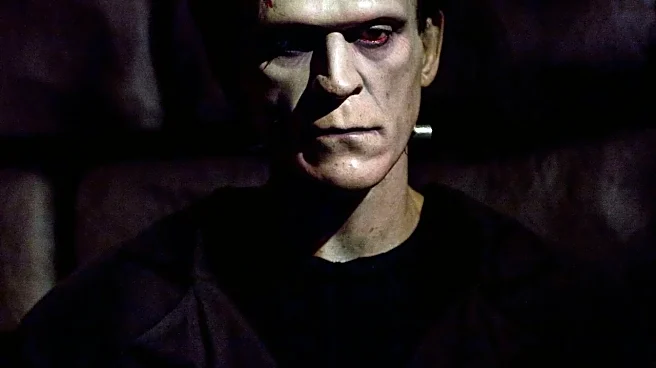
Lighting a masked character is completely different from lighting an actor. Cinematographers often treat the mask and the actor's eyes as two separate elements. The goal isn't to create a flattering, even light, but to use shadow and contrast to give the static mask a sense of life and menace. Using strong top-down lighting, sometimes called "skull lighting," can cast the eye sockets into deep shadow, making the character feel less human and more skeletal. Side lighting that scrapes across the surface of a mask can highlight its texture and details, making it feel more sinister. By carefully controlling where light falls and where it doesn't, a filmmaker can change a blank piece of latex from an inanimate object into the face of your nightmares.
Let Breath and Sound Do the Talking
What you hear is just as important as what you see. Since a mask often muffles an actor's voice, sound design becomes crucial for conveying emotion. The most iconic example is Darth Vader's mechanized breathing, which tells you he's more machine than man. In horror, the sound of a masked killer's breath can be just as terrifying. Is it labored and heavy, suggesting exhaustion or rage? Or is it calm and steady, suggesting an unfeeling predator? This audible element gives the character presence even when they are off-screen and provides clues to their emotional state. Actors working in masks often have to project their voice more and use vocal modulation to compensate for the lack of facial cues, making every sound they emit a deliberate choice.