






The Hobby of a Haunted Man
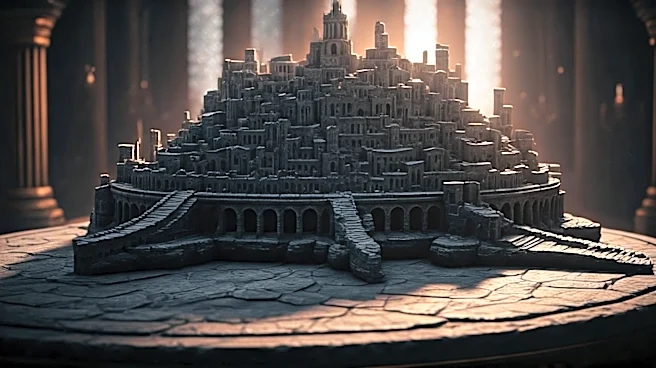
In the quiet of his chambers, away from the vipers of his court, Viserys (played with tragic frailty by Paddy Considine) painstakingly builds a massive stone model of Old Valyria. It’s more than a hobby; it’s an obsession. This isn’t a collection of miniatures
a king might enjoy. It's a sprawling, complex, and intensely detailed reconstruction of a dead civilization. Each stone placed is an act of devotion to a glorious past his own family torched and fled. The show’s production designers intentionally made it a centerpiece of his private world, a physical manifestation of his psyche. He doesn’t collect art or hunt; he builds ruins. This single choice tells us that Viserys lives more in the glorious, imagined past than in the treacherous present.
A Monument to Nostalgia and Inaction
Viserys inherited a peaceful and prosperous Westeros, but he carries the weight of Targaryen legacy like a shroud. He is obsessed with the idea of being a great king, but his vision of greatness is purely retrospective. His model city is a perfect symbol for this. It represents the height of Targaryen power, a world of dragons and magic that is long gone. By focusing his energy on this dead past, Viserys avoids confronting the difficult realities of his own reign. He wants to be seen as a successor to the great Targaryens of old, but he’s not a conqueror like Aegon or a wise lawmaker like Jaehaerys. He’s a custodian, a curator. His model is pristine, orderly, and under his complete control—everything his actual kingdom is not. It’s a fantasy where he is the master builder, not the besieged ruler struggling to manage his own family.
The Stage for Connection and Deceit
The model isn’t just a static symbol; it’s an active player in the drama. It’s the setting for some of the most pivotal relationships in the show. Viserys first bonds with his daughter and heir, Rhaenyra, over the model, sharing stories of their ancestors and instilling in her a sense of dynastic duty. Here, the model is a bridge, a shared inheritance. But this bridge becomes a trap. After his first wife’s death, it is by this very model that a young Alicent Hightower, sent by her father, first connects with the grieving king. She feigns interest in his historical obsession, turning his private sanctuary into a stage for her political maneuvering. The prop that represents his deepest, most genuine passion becomes the tool used to manipulate him, setting in motion the very conflict he spends his life trying to avoid.
The Unfinished Work of a Decaying King
The most powerful aspect of the model’s symbolism emerges as Viserys himself begins to decay. As his body is ravaged by a mysterious illness, his work on the model becomes more desperate and pathetic. In his final days, a rotting husk of a man, he is still seen fumbling with the stone pieces, his trembling hands trying to place one more block, to complete one more section. It’s a heartbreaking visual metaphor. The unfinished model represents his unfinished reign. He failed to secure a peaceful succession, failed to unite his fractured family, and failed to build a lasting legacy. He leaves behind an incomplete project, just as he leaves behind a kingdom on the brink of civil war. The model, like his reign, is a grand, ambitious project that ultimately collapses under the weight of human frailty and division.