





A Bittersweet, Perfect Farewell
To understand the problem with *Toy Story 5*, we have to revisit the final, poignant moments of *Toy Story 4*. After decades of defining his existence by his devotion to a child, Sheriff Woody makes a revolutionary choice. He decides to leave Buzz, Jessie,
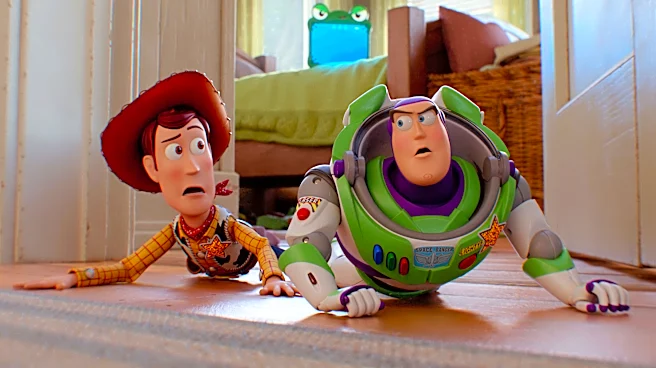
and the rest of his family to start a new life with Bo Peep, helping lost toys find new kids at a traveling carnival. It was a stunningly mature conclusion for the franchise’s central character. Woody’s entire arc across four films was about grappling with his purpose. He went from being Andy’s favorite, to fearing obsolescence, to learning to be a leader in a new kid’s room, and finally, to realizing his purpose wasn’t tied to a single owner. He graduated. The handshake and the quiet “to infinity… and beyond” between him and Buzz wasn’t just a goodbye; it was the thematic and emotional culmination of the entire saga. It said, definitively, that this chapter of his life—and his story with this specific group of toys—was over.
The Narrative Trap of a Reunion
This brings us to the structural problem. How does *Toy Story 5* reunite Woody with the gang for a feature-length adventure without completely invalidating the profound sacrifice and growth he demonstrated? Bringing him back into the fold isn’t as simple as having him visit for the weekend. The core engine of a *Toy Story* film is the ensemble, a group of toys bound by a shared owner and a shared home, facing a crisis together. If a new crisis simply pulls Woody away from his new life and back into Bonnie’s room, it retroactively cheapens his decision. That gut-wrenching choice in *Toy Story 4* becomes a temporary sabbatical, not a life-altering conclusion. The stakes of his departure are immediately lowered. The story must either invent a contrived, world-ending reason for him to return—which feels inorganic—or it has to treat his grand farewell as a minor event, a narrative speed bump on the way to the next adventure. Neither option respects the powerful storytelling that came before it.
Two Roads, Both Problematic
Logically, the writers have two primary paths, and both are fraught with peril. The first is a split narrative. The film could follow Woody and Bo Peep on their adventures helping lost toys while simultaneously tracking a separate story with Buzz, Jessie, and the gang. While this would preserve the integrity of *Toy Story 4*’s ending, it would fracture the very thing that makes the franchise work: the ensemble chemistry. A *Toy Story* movie where Woody and Buzz spend most of their time in separate plots, only to converge at the end, is barely a *Toy Story* movie at all. Their dynamic is the series’ heart. The second, more likely path is the full reunion. The plot will create a reason—a kidnapping, a long-distance trip, a new existential threat—that forces the two groups together again. While this restores the ensemble, it’s the path that does the most damage to Woody’s arc. It suggests that his new purpose was secondary to his old life, and that he can just drop it whenever his old friends need him. It’s an easy solution that prioritizes fan service over character integrity.
Can Pixar Solve Its Own Puzzle?
One should never bet against Pixar. The studio is filled with some of the most brilliant storytellers in the world, and they’ve navigated tricky narrative territory before. It’s possible they have a third, genius-level solution that honors Woody’s choice while still delivering a satisfying new story. Perhaps the film is a prequel, or a story set in the gap between films, though that seems unlikely for a numbered sequel. But the challenge here is uniquely difficult. It’s not just about coming up with a clever new adventure; it’s about justifying its own existence in the face of a conclusion that felt so final and so right. The burden of proof is immense. They aren't just making another sequel; they're writing an epilogue to what many considered a closed book. The success of *Toy Story 5* won't be measured by its jokes or its animation, but by whether it can provide a truly compelling answer to the question: “Why was this story necessary?”