






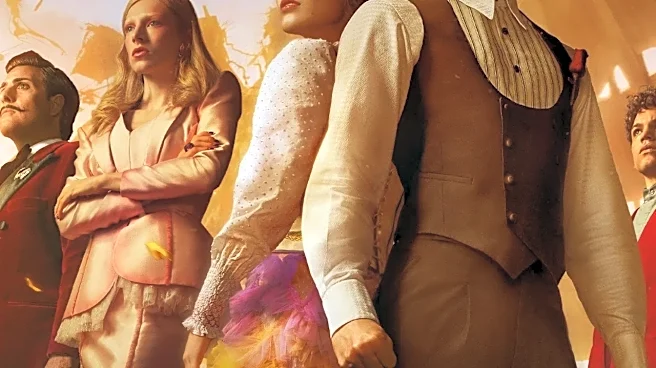

In the brutal world of The Hunger Games, the Capitol's cruelty is an art form. Nowhere is this more apparent than in the arena for the 50th Games, where a paradise-like setting created a special, more insidious brand of psychological horror.
A Paradise Built from Poison
The Second
Quarter Quell, which doubled the number of tributes to 48, took place in what was described as the most breathtaking arena imaginable. At first glance, it was paradise: a lush meadow, sweet-smelling flowers, a tranquil forest, and a snow-capped mountain on the horizon. Many tributes were stunned into inaction by the sheer beauty. But this was a trap of unparalleled cruelty. Everything, from the water in the streams to the scent of the flowers and the vibrantly colored butterflies, was lethally poisonous. The only safe food and water came directly from the Cornucopia, turning the initial bloodbath into a life-or-death fight for the most basic sustenance. This wasn't just a battlefield; it was an environment designed to betray every natural instinct for survival.
The Psychology of a Gilded Cage
Why would the Gamemakers create a place of such deceptive beauty? The answer lies in the Capitol's mastery of psychological torture. A barren wasteland or an urban ruin is an obvious threat. Tributes would enter with their guard up, ready to fight. But a beautiful landscape offers a sliver of hope, a moment of awe that can be lethally distracting. It suggests peace and serenity, making the inevitable violence feel like a grotesque violation of a sacred space. This juxtaposition creates a deeper form of terror. The arena becomes an active antagonist, a beautiful monster that promises life while dealing death. Every lovely tree or colorful bird could be a weapon, fostering a level of paranoia that could break a tribute's mind long before their body gave out.
Haymitch's Victory: Outsmarting the Artifice
The victor of these games, a 16-year-old Haymitch Abernathy, won not merely by being a skilled killer, but by being clever enough to understand the arena's twisted logic. While others were mesmerized or quickly fell victim to the poison, Haymitch allied with Maysilee Donner, using the arena's own poisons to their advantage. His ultimate victory, however, came from recognizing the artifice of it all. Discovering the arena's boundary was a force field, he used it as a weapon in his final confrontation, bouncing his opponent's axe back to kill her. This wasn't just winning; it was an act of defiance that made a mockery of the Gamemakers' elaborate design. The Capitol was so incensed by this embarrassment that they later murdered Haymitch's family and girlfriend as punishment, a trauma that would define his entire life.
A Blueprint for Future Cruelty
The 'poison paradise' of the 50th Games set a precedent. It proved that the most effective arenas were not just violent, but psychologically devastating. This blueprint was perfected 25 years later for the Third Quarter Quell, where Katniss Everdeen and other victors were thrown into a stunning tropical island. This new arena was another paradise at first glance, but it was secretly a perfectly calibrated clock, with each hour unleashing a new, targeted horror—from blood rain to vicious monkey muttations. The beauty was, once again, the wrapping paper on a box of horrors. The Capitol learned from Haymitch's games that the most terrifying weapon isn't a sword or a beast, but a perversion of hope itself.