




The Rise of a National Icon
Before the 1998 World Cup in France, David Beckham was more than just a gifted Manchester United midfielder; he was a cultural phenomenon. His talent for spectacular goals was matched only by his celebrity status, fueled by his relationship with Spice
Girl Victoria Adams. With his precision free-kicks and model good looks, 'Becks' was the face of a new, modern Britain. On the field, he was an essential part of the England squad, having played in every qualifying match. His combination of athletic prowess and pop-culture appeal made him a national darling, a symbol of youthful success poised for global greatness.
A Rivalry Steeped in History
The stage for Beckham's dramatic fall was a last-16 match against Argentina, a fixture loaded with history beyond the soccer pitch. The rivalry was intensified by the memory of the Falklands War and Diego Maradona's infamous 'Hand of God' goal in 1986. The match in Saint-Étienne was electric from the start, a whirlwind of action that saw the teams tied 2-2 just after halftime. Michael Owen had scored a wonder goal for England, but the tension was palpable. For England fans, a match against Argentina was never just a game; it was a clash of national pride and sporting identity.
One Moment of Retaliation
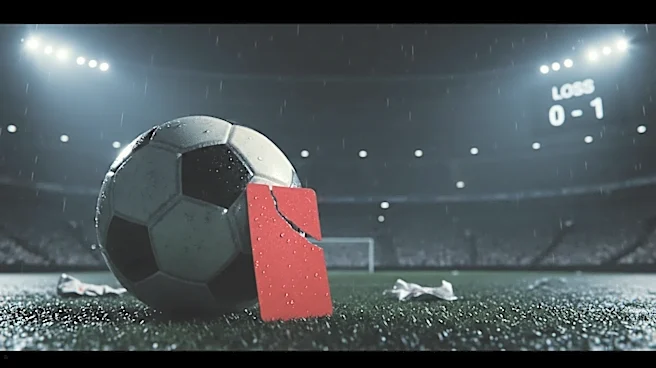
The moment that changed everything came in the 47th minute. Argentina's crafty midfielder, Diego Simeone, clattered into Beckham from behind, sending him to the turf. As Simeone got up, he gave Beckham a pat on the back of the head. Lying on the grass, Beckham impulsively flicked his right leg out, catching Simeone's calf. It was a petulant, not violent, act, but Simeone made the most of it, collapsing dramatically. Danish referee Kim Milton Nielsen was surrounded by Argentine players and, after a moment, produced a straight red card. Beckham was sent off, and England was forced to play with ten men. Years later, Simeone would admit he took advantage of the situation to get his opponent dismissed.
The Making of a Villain
Though the ten men of England fought bravely, they eventually lost in a heartbreaking penalty shootout. The nation needed a scapegoat, and they found one in David Beckham. The media backlash was immediate and vicious. One tabloid ran the infamous headline, "Ten Heroic Lions, One Stupid Boy," while another printed a dartboard with Beckham's face as the bullseye. The public's reaction was even more frightening. An effigy of Beckham was hung from a pub in London, and he received death threats and bullets in the mail. He was booed relentlessly at every stadium he played in the following season. The abuse was so extreme that he later described himself as being "clinically depressed" and a "mess."
The Long Road to Redemption
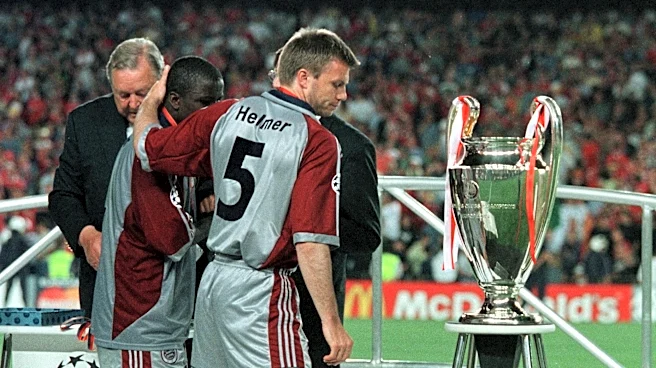
The journey back from public enemy number one was long and arduous. Beckham responded on the pitch, having one of his best seasons ever and helping Manchester United secure a historic treble—the Premier League, FA Cup, and Champions League—in 1999. But true national redemption didn't come until October 2001. In the final seconds of a World Cup qualifier against Greece, England needed a goal to avoid a perilous playoff. Beckham, the captain, stepped up to a free-kick and curled a spectacular shot into the net, securing England's place in the 2002 World Cup. In that moment, the villain of 1998 became the nation's hero once more, a transformation completed when he scored the winning penalty against Argentina in the tournament itself.