


Engineered for Universal Laughs
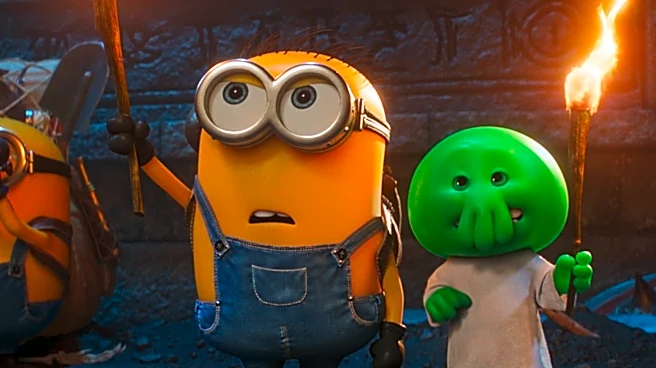
The foundation of the Minions’ success is their design, which is a masterclass in mass appeal. First appearing in 2010's "Despicable Me," the pill-shaped sidekicks were conceived as classic comic relief. Their humor is almost entirely non-verbal, relying
on slapstick, expressive goggle-eyes, and a gibberish language called 'Minionese' that is a mash-up of Spanish, French, Italian, and other languages. This approach makes their comedy instantly understandable across cultures and age groups, harkening back to the physical comedy of silent films and classic cartoons like "Looney Tunes." For children, the appeal is obvious: they are small, energetic, silly, and cause chaos without consequence. They tap into a pure, childlike sense of fun and mischief.
The First Wave: Facebook's Sincere Stars
The Minions' journey into adult meme infrastructure began not with irony, but with sincerity. Around the release of the second "Despicable Me" film in 2013, they became a fixture on Facebook, particularly among parents and older users. Their simple, cheerful aesthetic made them perfect canvases for earnest, often cliché, text posts—inspirational quotes, complaints about Mondays, or celebratory Friday messages. The Minions, in this context, became a kind of digital shorthand for relatable, everyday emotions. They were used as a family-friendly vehicle to express simple truths or frustrations, transforming them from movie characters into a widespread, if sometimes baffling, form of communication for a specific online demographic.
The Second Wave: Ironic and Absurdist Icons
What one generation embraces sincerely, the next often co-opts for irony. As Minion memes became synonymous with a less internet-savvy, "Facebook mom" corner of the web, younger Gen Z and millennial users began to repurpose them. The very sincerity that defined the first wave of memes was twisted into absurd, surreal, or dark humor. The Minions' inherent innocence became the punchline when juxtaposed with edgy or nonsensical captions. This second life was supercharged by trends on platforms like TikTok, such as the "#gentleminions" movement where teens attended screenings of "Minions: The Rise of Gru" in formal suits. This ironic embrace was a way of reclaiming the characters, acknowledging their 'cringe' factor while simultaneously celebrating it as a new form of post-modern comedy.
The Perfect Blank Slate
Ultimately, the Minions work as a cultural two-way mirror because they are, by design, everything and nothing at once. They have no fixed personality, no complex backstory, and no intelligible dialogue to pin them to a single meaning. They are, as one writer noted, paper-thin archetypes onto which we can project any feeling. This "blank slate" quality is the core of their function as meme infrastructure. A Minion can genuinely represent a child's love for bananas, an adult's sincere wish for a happy weekend, or another's surrealist, ironic joke. Like emojis, they are a malleable shorthand for a feeling, allowing them to exist simultaneously as kids' comedy and a deeply layered element of adult internet culture without either side canceling the other out.