






A Bigger Stage Changes Everything
The single biggest catalyst for this identity shift is the tournament's new format. Expanding from 32 to 48 teams means more nations get a ticket to the world's biggest sporting event. For decades, the World Cup was an exclusive club, making it brutally
difficult for up-and-coming programs to break in and build a narrative. The 2026 edition cracks that door wide open. This gives more countries a chance to showcase their style, their stars, and their stories on a global platform. The fear among purists was that this would dilute the quality, but the group stage has shown that many so-called smaller nations can compete. This expansion provides a platform not just for a single Cinderella run, but for multiple countries to establish themselves as consistent, compelling parts of the international soccer landscape. For nations making their debut or returning after a long absence, this tournament is a foundational moment.
The North American Hosts
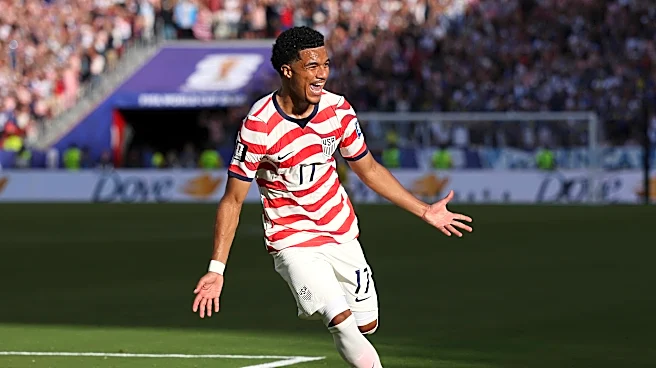
Nowhere is the quest for a new identity more pronounced than with the three host nations. The United States Men's National Team (USMNT) has been building what many call a "golden generation" of players competing in Europe's top leagues. For them, 2026 is the moment to prove they are not just talented individuals but a cohesive unit that can make a deep run, shedding the label of plucky underdogs for good. Canada, meanwhile, is writing a completely new chapter. After decades in the soccer wilderness, their run to the Round of 16 has fundamentally altered the sport's place in the country's consciousness. For a team that once struggled to score goals, their performance signals a transition from a novelty act to a legitimate and sustainable soccer nation. Then there's Mexico. For El Tri, the story is about breaking a curse. The infamous "quinto partido"—or fifth game—has been a psychological barrier for decades, with the team consistently exiting in the Round of 16. Hosting provides their best chance to finally overcome that hurdle and redefine their identity from one of frustrating consistency to one of genuine championship contention.
The New Power Brokers
Beyond the hosts, other nations are using 2026 as a launching pad. Morocco's historic semifinal run in 2022 was seen by some as a fairytale, but their performance this year has proven it was the start of something real. Their success is no accident; it's the result of years of investment in infrastructure and youth development, like the world-class Mohammed VI Football Academy. They have successfully blended homegrown talent with players from their diaspora to create a formidable, tactically astute team that is now a fixture in the quarterfinals. Their story is a powerful blueprint for how a nation can strategically build a new identity, moving from a regional power to a global contender. Other nations with burgeoning young talent will be watching closely, seeing 2026 as the tournament where their own "golden generations" can make a similar leap.
A Different Kind of Victory
Ultimately, only one nation will lift the trophy on July 19. But the 2026 World Cup offers a different, and perhaps more broadly significant, kind of victory. In a 48-team tournament, success is no longer defined solely by reaching the final. For many, it will be about winning their first-ever knockout game, establishing a new tactical style that captures the world's attention, or simply proving they belong on this stage. The expanded format allows for a richer, more diverse narrative of what it means to be a successful soccer nation. Teams are no longer just playing for a cup; they're playing for respect, recognition, and the chance to write a new story for themselves that will inspire the next generation of players and fans. The world is watching to see who seizes this historic opportunity.