






1. The World Meets Pelé (1958)
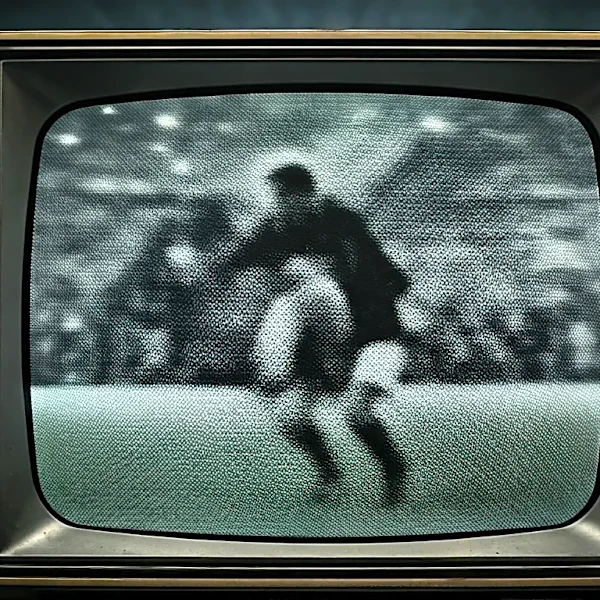
Before 1958, the World Cup was a largely Euro-centric and South American affair, its heroes known mostly through radio broadcasts and newsreels. That all changed in Sweden. The tournament was the first to receive broad international television coverage,
giving the world its first glimpse of a 17-year-old Brazilian kid named Edson Arantes do Nascimento—Pelé. His performance was electric. He scored a hat-trick in the semifinal and two more goals in the final against the host nation. It wasn't just the goals; it was the joy, the flair, the impossible-seeming talent. For the first time, a global television audience fell in love with a player and a team simultaneously. Pelé became the sport’s first truly global superstar, and Brazil’s vibrant style of play became the aesthetic benchmark for what soccer could be. This was the moment the tournament proved it could create worldwide icons overnight.
2. The Beautiful Game in Full Color (1970)
If 1958 was the birth of the televised World Cup, 1970 was its magnificent coming-of-age. Held in Mexico, this was the first tournament broadcast to a global audience in full color. The timing could not have been more perfect. The star of the show was the legendary Brazil team, led by a mature Pelé in his final tournament. Their canary yellow shirts, the green grass of the Azteca stadium, and the vibrant confetti of the Mexican fans created a visual spectacle that burned itself into the collective consciousness. This team, featuring legends like Jairzinho, Tostão, and Rivelino, played with a symphonic quality that is still considered the pinnacle of “The Beautiful Game.” Their 4-1 victory over Italy in the final is capped by a team goal from Carlos Alberto that many consider the greatest ever scored. The 1970 World Cup wasn't just a sporting event; it was a televised art form. It cemented the tournament's identity as a must-watch spectacle of color, skill, and drama.
3. America Opens for Business (1994)
For decades, soccer was the world’s game… except in America. FIFA knew that to achieve true global commercial dominance, it had to crack the massive U.S. market. The decision to award the 1994 World Cup to the United States was a strategic masterstroke. Despite skepticism about a host nation with no major professional league at the time, the tournament was a staggering success. It shattered attendance records, with an average of nearly 69,000 fans per game—a record that still stands today, even with an expanded format. Staged in massive NFL and college football stadiums, the event was slick, professional, and perfectly packaged for sponsors and television. It proved the World Cup could thrive outside its traditional heartlands and became the most financially successful tournament in history. More importantly, its success laid the groundwork for the launch of Major League Soccer (MLS) in 1996, finally giving the sport a permanent professional foothold in the world’s largest economy.
4. A New Century in a New Continent (2002)
By the turn of the millennium, the World Cup had conquered Europe, the Americas, and television screens everywhere. The next logical step was Asia. The 2002 tournament, co-hosted by South Korea and Japan, was a monumental undertaking and the first-ever World Cup held on Asian soil. It signaled FIFA’s commitment to making the event a truly global property, not just one rented out to the highest bidder in Europe or the Americas. The tournament was a cultural and logistical triumph. The futuristic stadiums, the passionate and impeccably organized local fans, and the shocking success of the South Korean team, who made an improbable run to the semifinals, created a unique and unforgettable atmosphere. By successfully staging the event across two nations with complex historical ties, FIFA showed that the World Cup could be a vehicle for more than just sport—it could be a platform for regional cooperation and national pride on a global stage.
5. The Vuvuzela Heard 'Round the World (2010)
The final frontier for the World Cup was Africa. Awarding the 2010 tournament to South Africa was a hugely symbolic moment, coming just 16 years after the end of apartheid. It was a recognition of Africa's passion for the game and its place in the global community. The event was a celebration of African culture, and nothing captured its unique spirit more than the vuvuzela. The plastic horn, creating a constant, buzzing drone in every stadium, became the tournament's controversial but undeniable soundtrack. For viewers at home, it was an immediate auditory signal: this World Cup was different. From Shakira’s “Waka Waka” anthem to the stunning opening goal by Siphiwe Tshabalala for the host nation, the tournament felt like a party the whole world was invited to. It proved the World Cup could be hosted successfully anywhere, completing its journey to every inhabited continent and cementing its status as the one event that truly belongs to the entire planet.