





The Old Guard: Spectacle and Starlight
Wolfgang Petersen’s Troy (2004) is a film of its era—a big, brassy, and unapologetically commercial sword-and-sandal epic. Riding the wave of Gladiator's success, it presented a vision of ancient Greece that was grounded, gritty, and, most importantly,
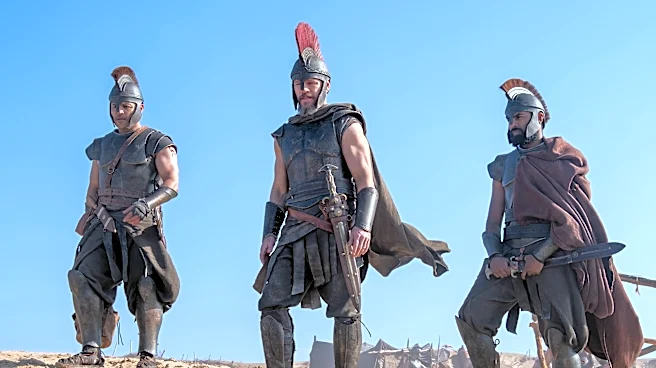
human. The film's most significant choice was excising the gods entirely. Homer’s meddling Olympians were replaced by human ambition, flawed politics, and the sheer star power of Brad Pitt as a brooding, rockstar Achilles. The story, based on The Iliad, was streamlined into a more conventional war film, focusing on the tactical genius of Hector (Eric Bana) and the tragic romance between Paris and Helen. It was a spectacle of thousands of digital soldiers and sun-drenched close-ups on beautiful people. Critics were divided, with some lamenting the loss of the source material's poetry and divine scale, while others praised its humanistic focus and epic battles. Ultimately, Troy stands as a monument to a specific model of blockbuster: take a classic story, strip it for parts, cast a massive star, and focus on the action.
The New Master: Mind-Bending Mythology
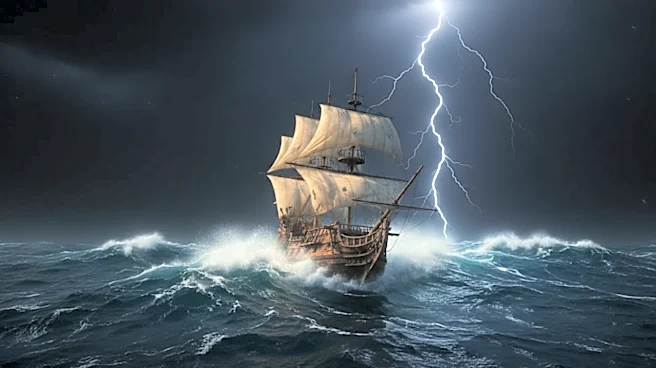
Enter Christopher Nolan. After the monumental success of Oppenheimer, Nolan leveraged his considerable industry clout to tackle Homer’s other foundational text, The Odyssey. And he has done it in the most Nolan-esque way possible. His film, shot entirely in IMAX, is a sprawling, psychologically dense journey. Starring Matt Damon as a haunted, complex Odysseus, the film treats the epic’s fantastical elements not as monsters to be slain, but as manifestations of trauma, memory, and existential dread. Nolan’s signature non-linear storytelling is a perfect fit for a hero whose defining trait is his twenty-year journey home, much of which is told in flashback. The gods, like Athena (played by Zendaya), exist, but they operate in a way that feels both immense and internal, their influence more psychological than physical. It's a film less about the events of the journey and more about the internal landscape of its hero, a man struggling to remember who he is after the horrors of war.
Gods, Heroes, and Hollywood's Evolution
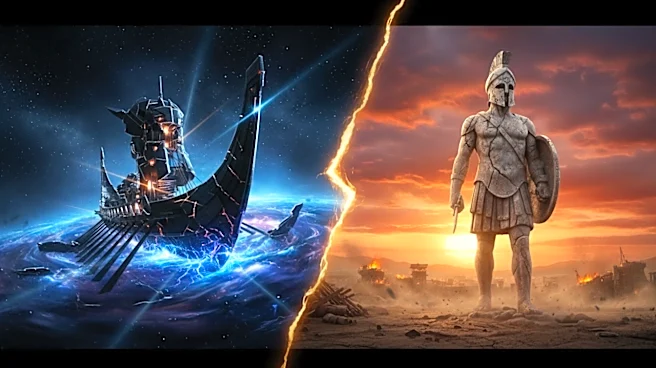
Placing these two films side-by-side reveals a stark evolution in blockbuster filmmaking. Troy sought to make myth relatable by making it more realistic, removing the supernatural to focus on a human war. Its hero, Achilles, is driven by a quest for immortal fame. Nolan’s Odyssey, by contrast, embraces the mythic but internalizes it. It suggests the most terrifying monsters are the ones we carry within us. Damon's Odysseus isn't seeking glory; he's a man broken by it, desperately trying to return to a home he may no longer recognize or deserve. Where Petersen used CGI to render massive armies, Nolan uses his immense budget and practical effects to render psychological states—a Cyclops that feels like a manifestation of brute trauma, or the Sirens' call as a lure of oblivion. Troy is an external film about a war; The Odyssey is an internal film about a man’s soul at war with itself.
Two Epics, Two Audiences
The difference in these approaches also speaks to a change in audience expectations. The early 2000s blockbuster model, exemplified by Troy, prioritized clarity and star-driven spectacle. It delivered a straightforward narrative built for the widest possible global audience. Nolan, on the other hand, has built his entire career on trusting his audience to keep up. From Inception to Oppenheimer and now The Odyssey, he makes event films that demand active participation. He creates puzzles, weaves complex timelines, and explores heady philosophical themes, all within the package of a summer blockbuster. One model gives the audience what it expects in the biggest way possible; the other challenges the audience to expect more from itself. Neither is inherently superior, but the commercial and critical success of Nolan's approach suggests a significant appetite for more complex, director-driven epics.