





The Trigger: A Costly Mistake
Every great advantage begins with an opponent’s error. In both soccer and hockey, these game-changing opportunities are born from an infraction. In hockey, a player commits a penalty—a trip, a slash, a hook—and is sent to the penalty box for two minutes
(or more), leaving their team shorthanded. This creates the “power play,” a numerical advantage for the other team. Similarly, a direct free kick in soccer is awarded after a foul—a reckless tackle or a handball—outside the penalty area. While the offending player isn't removed from the game, the position of the foul creates a sudden, high-leverage scoring chance. In both cases, a single moment of poor discipline hands a golden opportunity to the opposition.
The Tactical Shift: A Game Within the Game
The moment the referee’s whistle blows, the entire dynamic of the game shifts. On the ice, the five skaters on the power play unit spread out, often in a “1-3-1” or “umbrella” formation, designed to maximize puck movement and create shooting lanes. Their goal is to stretch the four-man penalty kill unit, forcing defenders out of position to open up a high-percentage shot. In soccer, the setup is more of a calculated siege. The defending team forms a “wall” of players, standing ten yards from the ball to block the most direct path to the goal. The attacking team positions players to screen the goalkeeper, make decoy runs, or pounce on a rebound. Both scenarios transform the free-flowing game into a structured, tactical chess match where specialized offensive and defensive units take center stage.
The Specialist: Enter the Quarterback
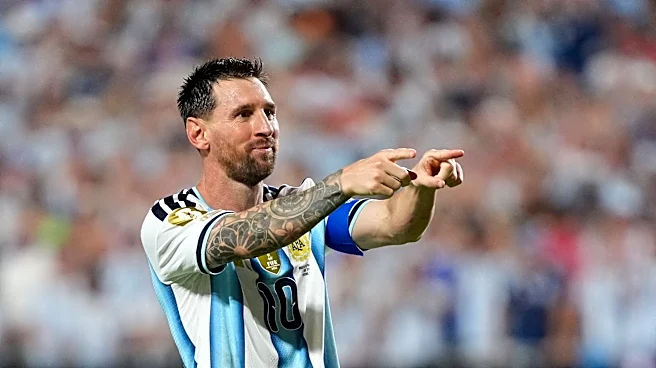
These moments are not for just any player; they are for the specialists. Hockey teams have a “power play quarterback,” typically a skilled defenseman or forward who dictates play from the point. Think of Cale Makar’s vision or Alex Ovechkin’s one-timer from his “office” at the top of the faceoff circle. These players are chosen for their puck-handling, passing, and shooting prowess. Soccer has its free-kick maestros—players revered for their ability to bend, dip, and curl a dead ball over a wall and past a diving keeper. Legends like David Beckham, Juninho Pernambucano, and Lionel Messi built entire reputations on this singular skill. In both sports, when the advantage is granted, all eyes turn to one player expected to execute under immense pressure.
The Goal: Capitalizing on Chaos
The objective is simple: score. But the path there is different. A power play goal is often the result of rapid puck rotation, forcing the penalty killers to chase and eventually leaving an attacker open in a dangerous area. It’s about creating and exploiting a defensive breakdown over a sustained period. Success is measured in percentages; a power play that converts 20-25% of the time is considered elite. A direct free kick is a more singular event—a single shot to change the game. The kicker must beat the wall and the goalkeeper, a feat of incredible technique and precision. While the success rate for direct free kicks is much lower (typically under 10%), its dramatic, all-or-nothing nature gives it a unique psychological weight. Both, however, are designed to punish the opposing team on the scoreboard.
The Momentum Swing: More Than Just a Goal
Beyond the scoreboard, the free kick and the power play are massive momentum drivers. Scoring a power-play goal doesn't just add a tally; it validates the advantage and can demoralize a penalty kill unit that just battled for a minute or more. Even failing to score on a power play can drain a team's energy. A successful free kick, especially a late-game winner, is one of soccer’s most iconic and heart-stopping moments. Conversely, a big save by the goalie or a successful penalty kill can be just as energizing for the defending team, providing a huge emotional lift. These set pieces are inflection points that can completely alter the flow and feel of a contest.