







What Is 'Ugly' Soccer, Anyway?
When fans complain about “ugly” soccer, they’re usually talking about a team that prioritizes defense above all else. This style has many names: “parking the bus,” a low block, or its Italian ancestor, “catenaccio” (door-bolt). The core idea is to surrender
possession in less dangerous areas, retreat into your own half, and form two compact, narrow lines of players. The goal isn't just to stop the opponent from scoring; it's to frustrate them, deny them space, and choke their creativity. Instead of expansive, attacking play, the focus is on structure, discipline, and waiting for the perfect moment to strike. It’s less about what you do with the ball and more about what you force your opponent to do—or, more accurately, what you prevent them from doing.
The Genius of Absolute Denial
A brilliant defensive performance is a masterpiece of organized resistance. Think of José Mourinho's Inter Milan against Pep Guardiola's legendary Barcelona side in the 2010 Champions League semifinal. Inter ceded possession, with Barcelona enjoying the vast majority of the ball, but they made that possession worthless. Mourinho's players executed a perfect game plan: they knew which spaces to block, which players to press, and how to use their compact shape to make one of the greatest attacking teams in history look toothless. Samuel Eto'o, a world-class striker, spent much of the second leg playing as an auxiliary left-back. This wasn't a failure to attack; it was a conscious choice to win by saying "no." The brilliance lies in the staggering level of concentration and coordination required from all ten outfield players for the full 90 minutes.
It's About Exploiting Weakness
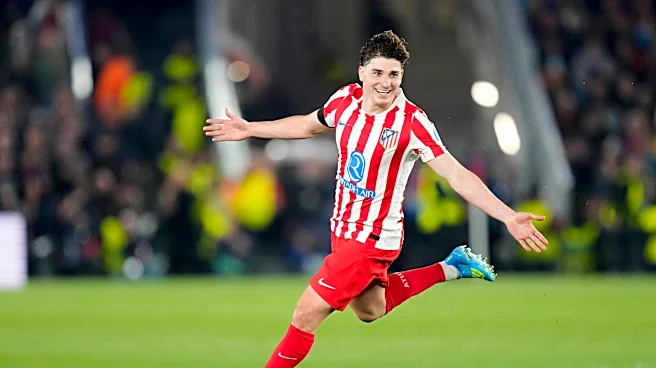
Defensive soccer is often the weapon of the underdog, and its beauty is rooted in cold, hard pragmatism. Diego Simeone's tenure at Atlético Madrid is a testament to this philosophy. For years, he built teams that reveled in their reputation as being difficult to play against. Using a rigid 4-4-2 formation, his players would remain incredibly narrow and compact, happily letting opponents pass the ball around the perimeter. But the moment a pass was misplaced or an attacker took a heavy touch, the trap would spring. Atlético would win the ball and launch a swift, ruthless counter-attack. This style neutralizes a technically superior opponent by turning their greatest strength—possession—into a weakness. By luring them forward, you create space behind their defensive line to exploit on the break. It's a high-risk, high-reward strategy that requires immense physical effort and tactical intelligence.
The Underrated Art of Defending
In a sport that glorifies goals, defenders and defensive midfielders are often the unsung heroes. Their work is about prevention—a non-event—which is harder for the casual fan to appreciate than a spectacular goal. But a perfectly timed tackle, a crucial interception, or holding a defensive line under immense pressure is a skill every bit as impressive as a pinpoint pass. Playing in a deep defensive block is mentally and physically exhausting. It requires constant communication, perfect positioning, and the discipline not to get lured out of shape by an opponent's movement. One player switching off for a single second can cause the entire structure to collapse. The brilliance of “ugly” soccer is found in this collective resilience and flawless execution under suffocating pressure. It’s a tactical art form built on intelligence and grit.