





1. La La Land (2016)
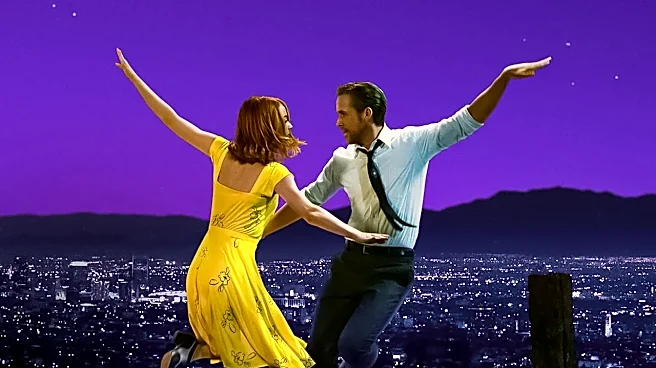
On the surface, 'La La Land' is a tribute to the Golden Age of Hollywood musicals. But its DNA is intertwined with a deep, bittersweet nostalgia that feels very familiar. The film’s main characters, Mia and Sebastian, are both traditionalists who feel born
in the wrong era. Sebastian is a jazz purist in a world of synth-pop, while Mia finds inspiration in classic cinema. Like Gil Pender in 'Midnight in Paris,' they are both in love with an idealized past and struggle to reconcile their romantic visions with modern reality. The film explores how nostalgia can be both a powerful creative fuel and a trap, a theme central to Gil’s journey through 1920s Paris. While 'La La Land' doesn't feature literal time travel, its vibrant, dreamlike vision of Los Angeles serves as a fantasy world where the past feels intoxicatingly present.
2. Pleasantville (1998)
Long before Gil Pender took his midnight strolls, two '90s teens were magically transported into the black-and-white world of a 1950s sitcom. 'Pleasantville' is a direct forerunner, using a high-concept fantasy premise to explore our relationship with nostalgia. The film critiques the sanitized, 'perfect' vision of the past often seen in media, a concept that 'Midnight in Paris' also touches on when its characters idealize even earlier eras. Initially, the 1950s town of Pleasantville seems idyllic, but it's a world without passion, art, or real emotion. When the modern teens introduce these concepts, the world literally begins to change, bursting into color. It's a powerful visual metaphor for what Gil Pender ultimately learns: that every generation romanticizes a past it never truly knew, ignoring its flaws for a comforting fantasy.
3. Yesterday (2019)
'Yesterday' presents a fascinating twist on the theme of artistic legacy. After a mysterious global blackout, a struggling musician named Jack Malik wakes up to a world where The Beatles never existed. He is the only one who remembers their music, giving him a direct, unearned pipeline to some of the greatest songs ever written. This premise puts Jack in a position similar to Gil Pender's: he becomes a conduit for the genius of a bygone era. The film explores the moral quandary of presenting past masterpieces as one's own, a conflict that weighs heavily on Jack. It's a clear parallel to Gil’s temptation to use his future knowledge to influence the literary giants he meets. Both films are magical realist fables about art, authenticity, and the overwhelming influence of the creative legends who came before us.
4. About Time (2013)
What if you could travel back in time, not to meet Ernest Hemingway, but to perfect the small moments of your own life? 'About Time' takes the time-travel element of 'Midnight in Paris' and makes it deeply personal. The protagonist, Tim, discovers he can revisit moments in his past, an ability he primarily uses to win the heart of the woman he loves and navigate the ups and downs of family life. While Gil Pender travels to a romanticized public past, Tim travels within his own private history. Both films, however, use this magical ability to explore a similar theme: the 'Golden Age' isn't a historical period, but the collection of cherished moments we build in our own lives. It swaps Parisian literary salons for quiet London life but retains that core sense of wistful, magical romance.
5. Ruby Sparks (2012)
This film takes the 'writer's fantasy comes to life' trope to a compelling and sometimes unsettling place. Calvin, a brilliant young novelist suffering from writer's block, dreams up his perfect woman, Ruby Sparks, and begins to write about her. Then, one day, she appears in his kitchen, a living, breathing person. 'Ruby Sparks' shares the magical realism of 'Midnight in Paris' but focuses its lens on the creative process itself. Calvin has the power to change Ruby by simply typing new sentences, exploring the themes of control, fantasy, and the ethics of creation. Just as Gil Pender interacts with his literary heroes, Calvin interacts with his own creation, forcing him to confront the gap between the idealized woman on the page and the complex person she becomes. It's a cautionary tale about loving the idea of someone versus loving who they really are.