


The Era of the Grand Entrance
There was a time when a star's arrival at an awards show was a piece of theater in three acts: the car door opening, the elegant exit, and the final reveal. The evening coat was the curtain for that reveal. In the golden age of Hollywood, icons like Ava
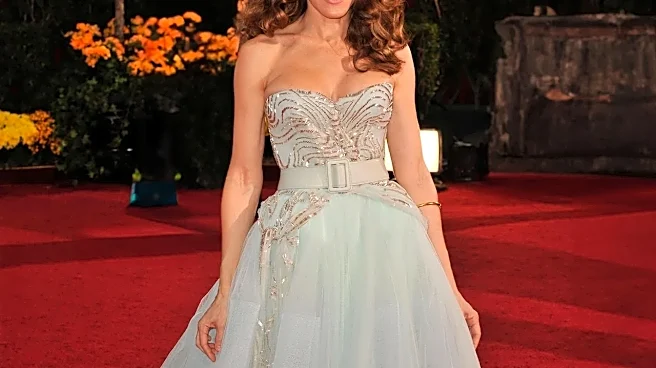
Gardner wouldn't be seen without a luxurious wrap, often fur, to add to the mystique. This tradition carried on for decades, signifying a certain kind of old-world elegance. The coat wasn't just for warmth; it was an integral part of the ensemble, a statement piece that built anticipation for the gown underneath. It suggested a life beyond the red carpet, a journey from a fabulous life to a fabulous event. Even into the early 2000s, stars with a flair for the dramatic understood its power. Sarah Jessica Parker, at the peak of her "Sex and the City" fame, famously wore an Oscar de la Renta creation in 2000 that, while not a separate coat, captured that spirit with its feathered skirt, creating a complete, theatrical look rather than just a dress.
More Than Just Fabric
The evening coat served a purpose beyond function. It was a tool of fashion storytelling. A simple column dress could be transformed by a dramatic, floor-length coat. A tailored jacket could lend an air of sharp sophistication. These pieces allowed for a moment of transformation. The act of shrugging off a coat for the photographers was a subtle performance, a way to command attention and manage the big reveal. It was fashion with a plot twist. Think of swing coats from the 1940s that allowed for graceful movement or opulent fur-trimmed jackets that screamed luxury. This layer added depth and texture to a look, suggesting that the wearer’s style was a complete narrative, not just a single, static image. It was the difference between an outfit and a dress, a distinction that has become increasingly blurred.
The Great Disappearance
So where did they all go? The decline of the evening coat can be traced to the evolution of the red carpet itself. Once a brief walk from car to theater, the red carpet morphed into a marathon of media obligations. The advent of the 360-degree camera and the E! Glambot means the dress must be seen from every conceivable angle, immediately. There’s no time for a reveal when the entire look has to be broadcast-ready from the second a celebrity steps out of the limo. Furthermore, the economics of red carpet dressing have changed. Designers loan out dresses worth tens or even hundreds of thousands of dollars for the publicity; stylists and stars have little incentive to cover up that investment, even for a moment. The focus shifted entirely to the gown as the singular vehicle for a fashion credit. The question “Who are you wearing?” became so central that anything obscuring the answer was deemed a distraction.
Has the Glamour Been Replaced?
While the traditional evening coat is largely a relic of red carpets past, its spirit hasn't vanished entirely. Instead, it has been absorbed into the dresses themselves. We see its echoes in the rise of dramatic capes, sculptural sleeves, and elaborate trains. Think of the sweeping, fuchsia Valentino ball-skirt Tracee Ellis Ross wore or the architectural gowns seen on stars like Zendaya and Ayo Edebiri. These elements provide the volume, drama, and sense of occasion that a separate coat once did, but they are integrated, ensuring the designer's primary creation is never hidden. The modern equivalent is not a separate layer but a single garment engineered for maximum visual impact. It’s a more efficient, if less romantic, approach to crafting an unforgettable red carpet moment in an era of intense media scrutiny.