







The Power of the Passionate Amateur
At the heart of “Only Murders in the Building” is a trio of lovable, flawed, and distinctly non-professional investigators: has-been actor Charles-Haden Savage, disgraced Broadway director Oliver Putnam, and enigmatic artist Mabel Mora. They aren't cops;
they're residents of the Arconia who share a fascination with a true-crime podcast. This is their defining qualification. Yet, their very amateurism is their greatest strength. Oliver’s theatricality helps him stage re-enactments and see narrative threads, Charles’s experience playing a TV cop gives him a (mostly useless but occasionally insightful) procedural framework, and Mabel’s artistic eye and personal connections to the victims provide the genuine human element often missing from official investigations. They succeed not by following police procedure, but by ignoring it. They rely on neighborhood gossip, personal intuition, and a deep knowledge of their community—resources the actual police overlook. This celebrates the idea that ordinary people, using their unique skills, can achieve extraordinary things, a classic underdog fantasy that is deeply satisfying for audiences.
The Problem with the Professionals
For an amateur detective story to work, the official investigation has to be lacking. “Only Murders” handles this with a clever touch. The police aren't always depicted as bumbling fools, but rather as overworked, cynical, or bound by rules that prevent them from seeing the bigger picture. In Season 1, Tim Kono's death is quickly ruled a suicide, shutting the case before it even begins. This forces the trio into action. Later seasons introduce Detective Kreps, a more antagonistic and arrogant officer who actively disdains the podcasters, viewing them as nuisances. His professional ego blinds him, making him an ineffective foil. The show’s most competent officer, Detective Williams, is an exception, but even she is constrained by the system. Initially dismissive, she eventually becomes a reluctant ally, covertly feeding the trio evidence she can't officially pursue. This dynamic reinforces a core theme: the professionals are too busy, too biased, or too bogged down by bureaucracy to solve the crime, leaving the door wide open for our heroes.
A Classic Cozy Mystery Trope
The dynamic of clever amateurs outwitting flat-footed professionals is a time-honored tradition in the “cozy mystery” genre. From Miss Marple noticing a detail the village constable missed, to Jessica Fletcher solving another one of Cabot Cove’s endless homicides while the sheriff scratches his head, the genre is built on the premise that justice can come from outside the system. “Only Murders” knowingly winks at this tradition. By placing the murders within a single, contained location (the Arconia), populating it with eccentric but familiar neighbors, and keeping the violence off-screen, it follows the cozy blueprint perfectly. The incompetent or uninterested police force is a key ingredient, creating the narrative space necessary for the amateur sleuths to step in and become the heroes. It taps into a frustration that the official channels aren't working, empowering the civilian to get involved.
Inviting the Viewer to Be the Fourth Detective
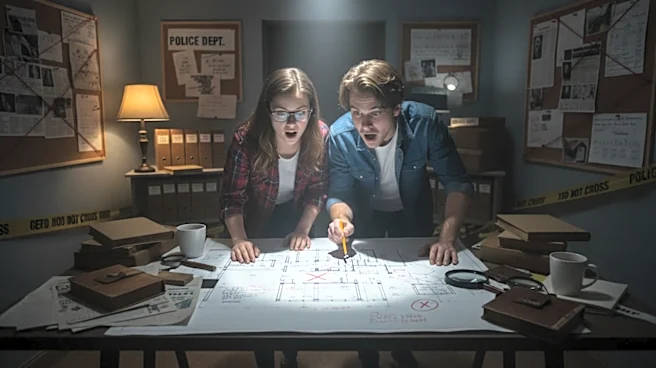
Ultimately, the show’s greatest trick is how it positions the viewer. Because we see the case unfold through the eyes of Charles, Oliver, and Mabel, we share their perspective. We get the same clues, hear the same gossip, and are encouraged to dismiss the official police narrative just as they do. The show makes the audience an extension of the investigative team. When Oliver maps out suspects on a whiteboard or Mabel connects a visual clue, we are right there with them, piecing it all together. This interactive experience provides a psychological satisfaction that a standard police procedural can't offer. The show respects its audience's intelligence, inviting them to solve the puzzle. By making the professional detectives a step behind, “Only Murders in the Building” ensures that when the trio—and by extension, the viewer—solves the crime, the victory feels earned, clever, and immensely gratifying.